
Lying on shore, seals look indolent. Reminiscent of lions that seem to spend more of their time lounging in the shade. However, seals spend lots of time actively swimming after food, especially when feeding pups, and earn their rest.
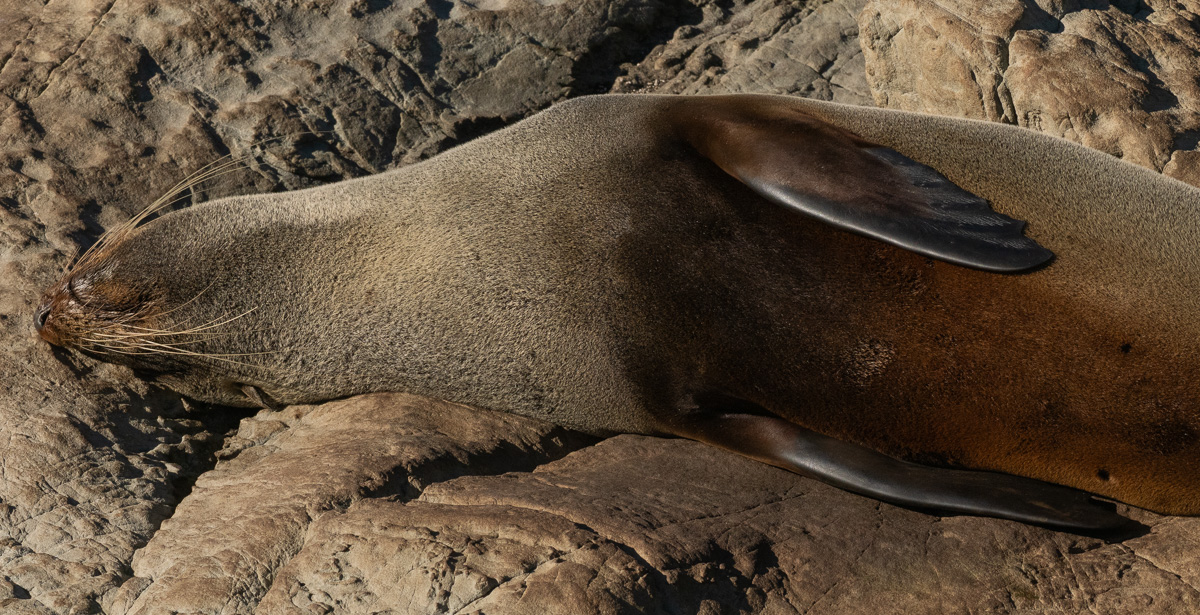

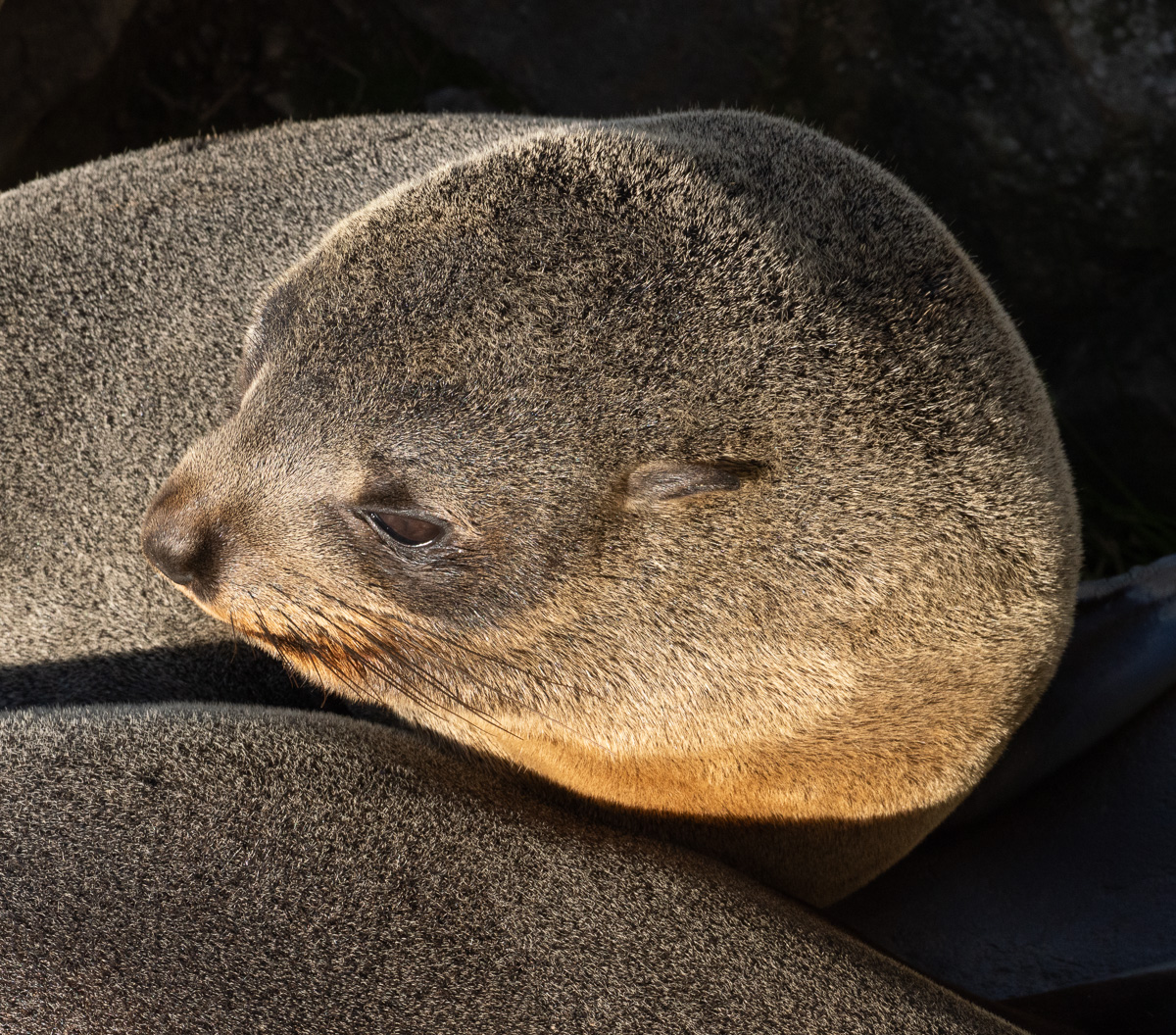


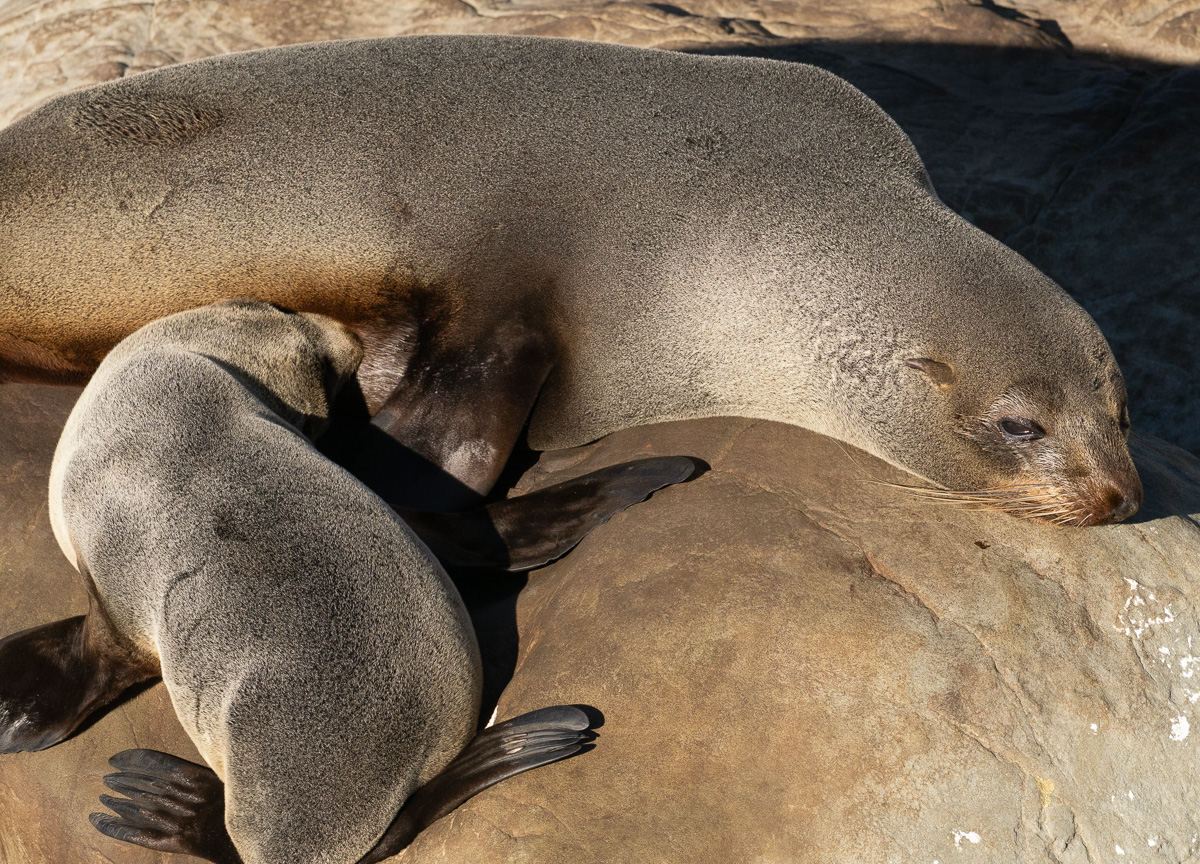

Lying on shore, seals look indolent. Reminiscent of lions that seem to spend more of their time lounging in the shade. However, seals spend lots of time actively swimming after food, especially when feeding pups, and earn their rest.
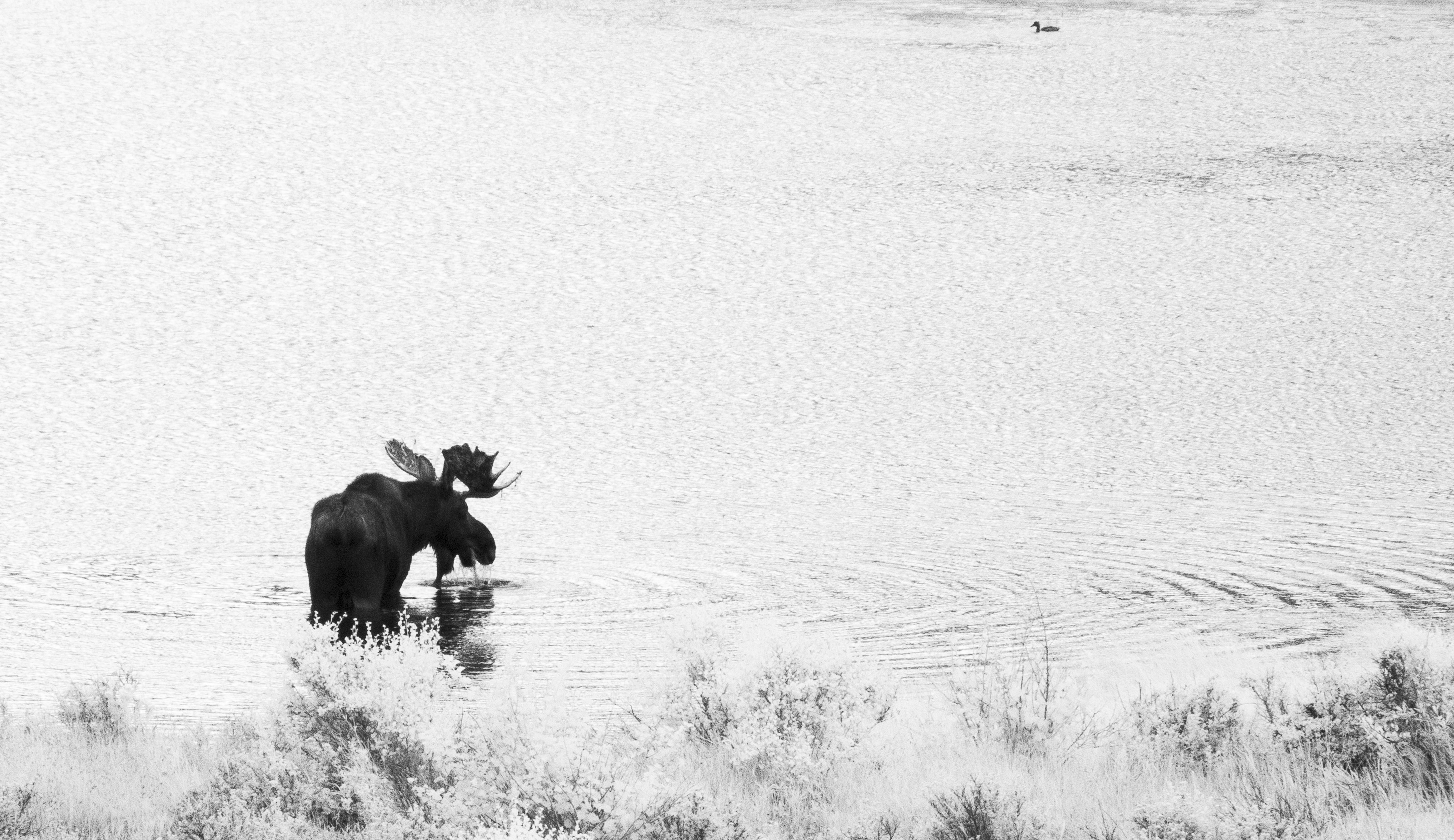
I began using an infrared camera to photograph landscapes. This is Balanced Rock in Arches National Park, Utah. I like the way the treatment lightens vegetation, sometimes giving an otherworldly look, which I find especially appropriate for cemeteries. I use a black and white conversion, for good contrast.
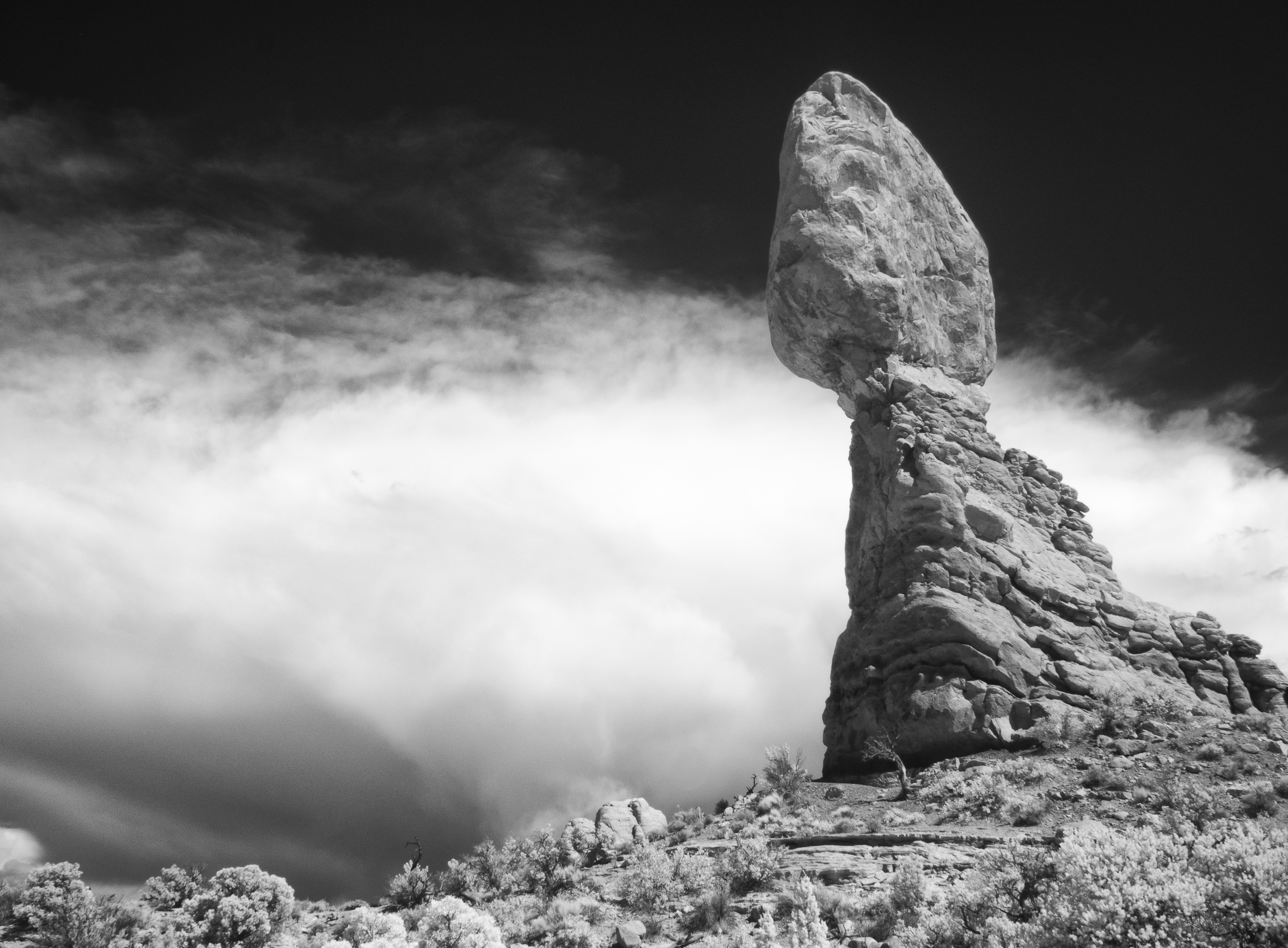
Then I began experimenting with animals, and liked what I got. This is a male mule deer in South Dakota. The grasses take on a delicate backdrop against which the animal stands out clearly.
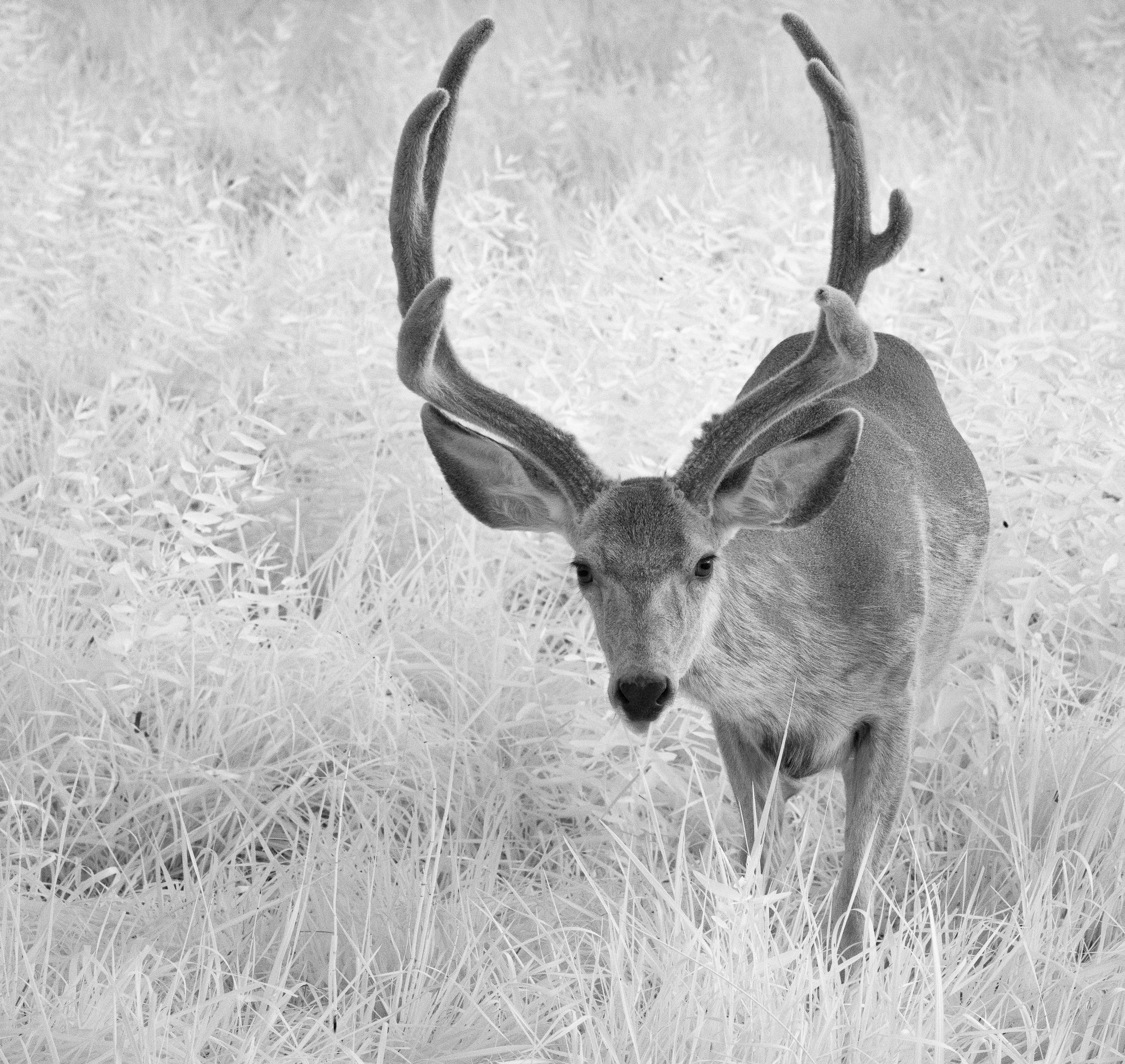
This chipmunk, caught in mid-leap, again stands out against a pale and blurred background.
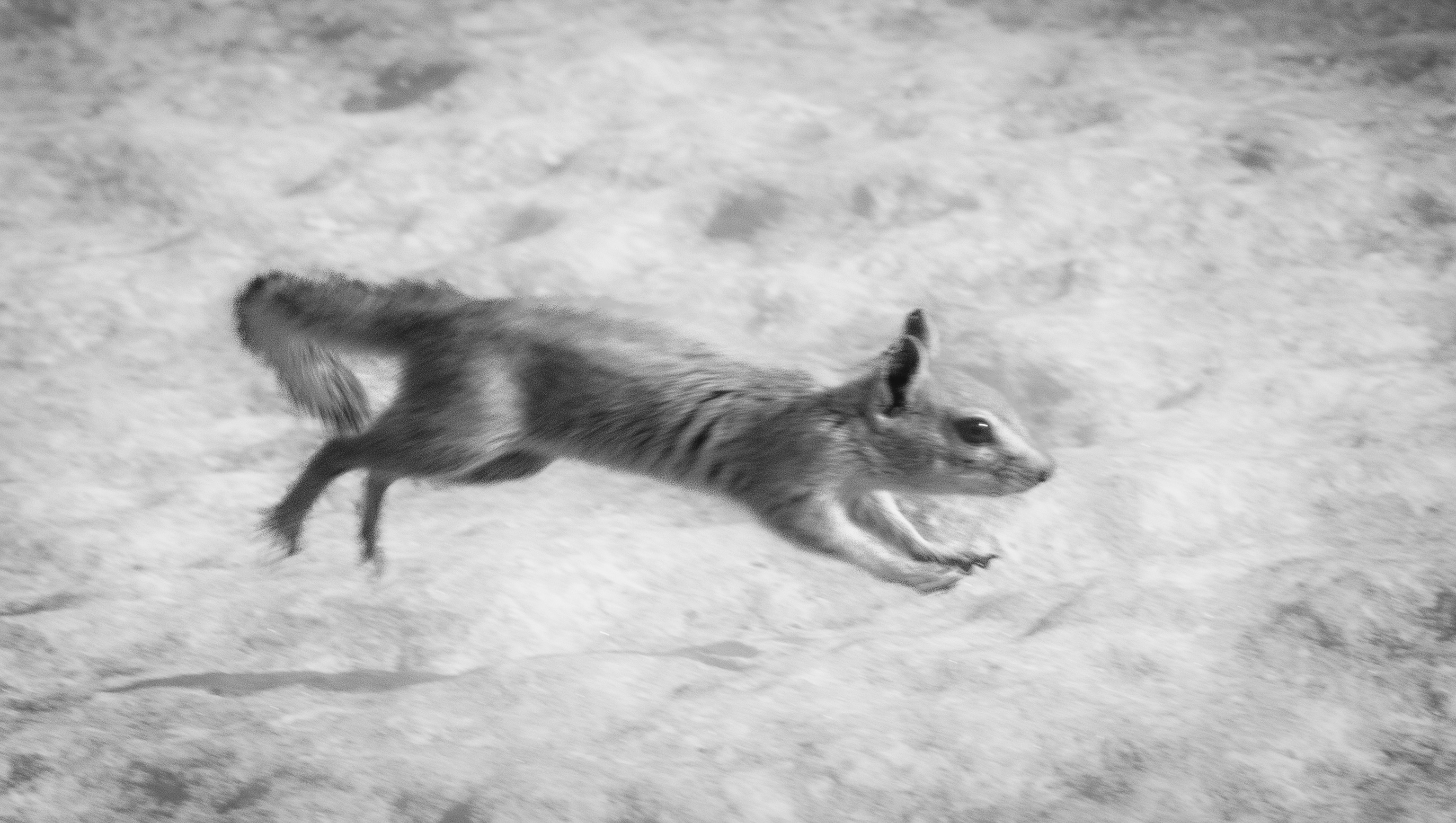
This next images was not intended to be in infrared. On that day, at Sheep Lake, in Rocky Mountain National Park, I saw a moose feeding, and needed my telephoto lens. The only camera I had with me at the time was the infrared converted OM Systems OM1, so I used it. Again, I liked what I got, the dark animal standing out against the light-coloured vegetation, and a tiny duck on the opposite edge of the frame.
I will experiment some more. I do love trees as well as animals, and using a lens baby with the infrared camera gave me this:
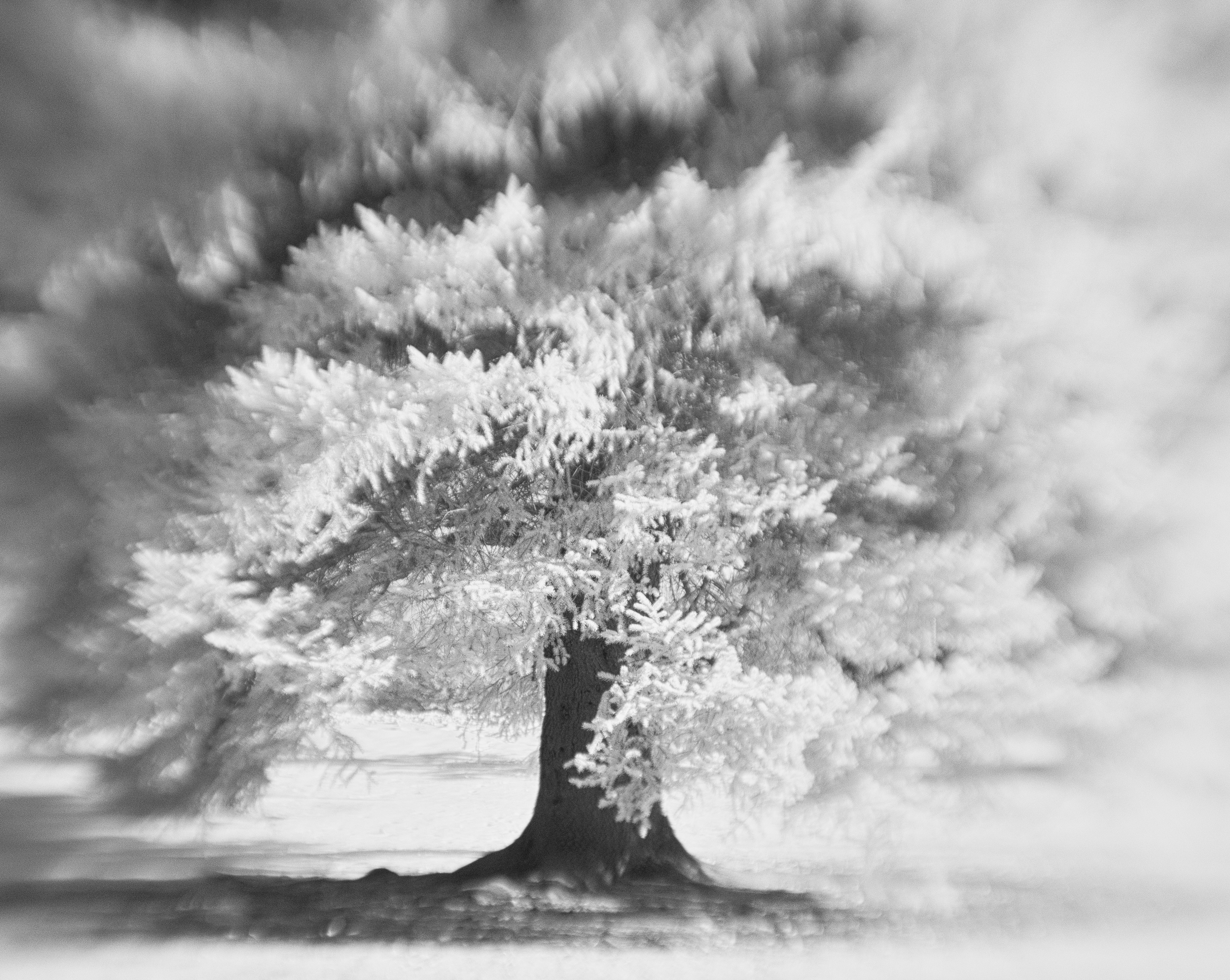
The tree is in Longmont, Colorado, and area that before European settlement would have been extensive prairie devoid of trees.




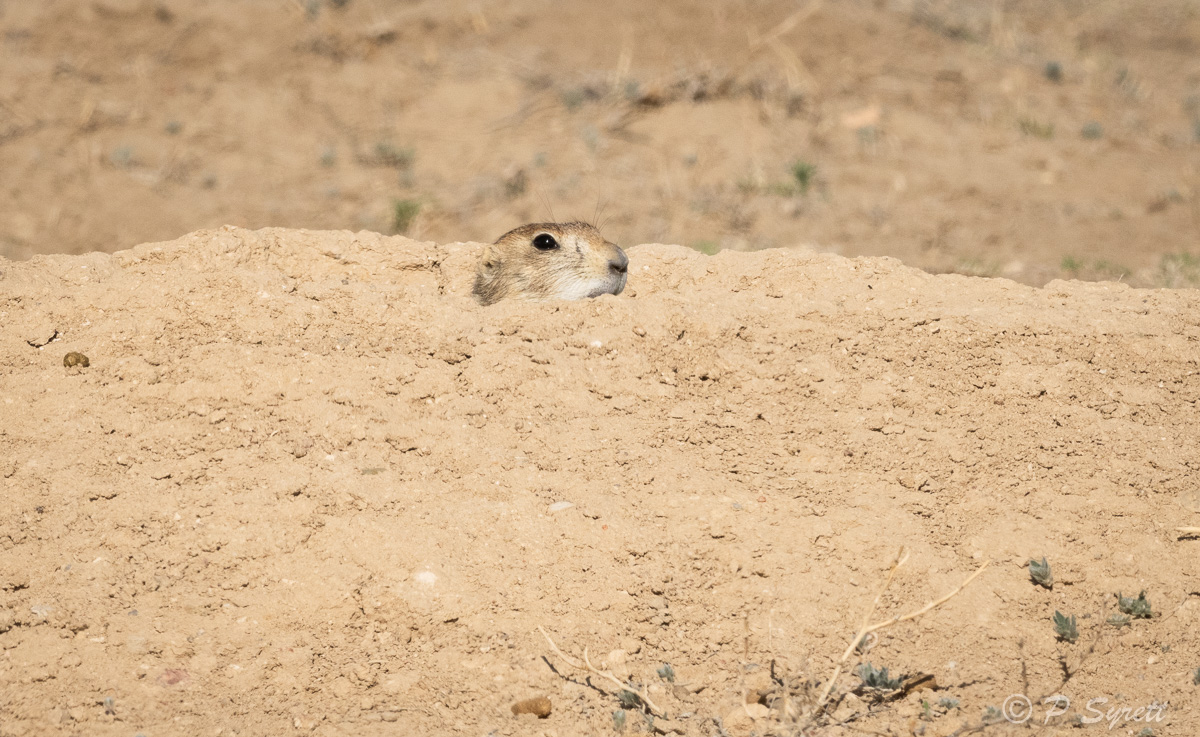
Prairie dogs seemed extra wary in the campground at Santa Rosa Lake State Park in New Mexico. It was perhaps obvious why they were nervous when I spotted a pair of burrowing owls flying around the colony. Burrowing owls are very distinctive, with their small stature and long legs. Like prairie dogs, they inhabit generally flat, dry areas with only low vegetation. They nest and roost in burrows, often frequenting those excavated by prairie dogs. These small animals also serve as prey.
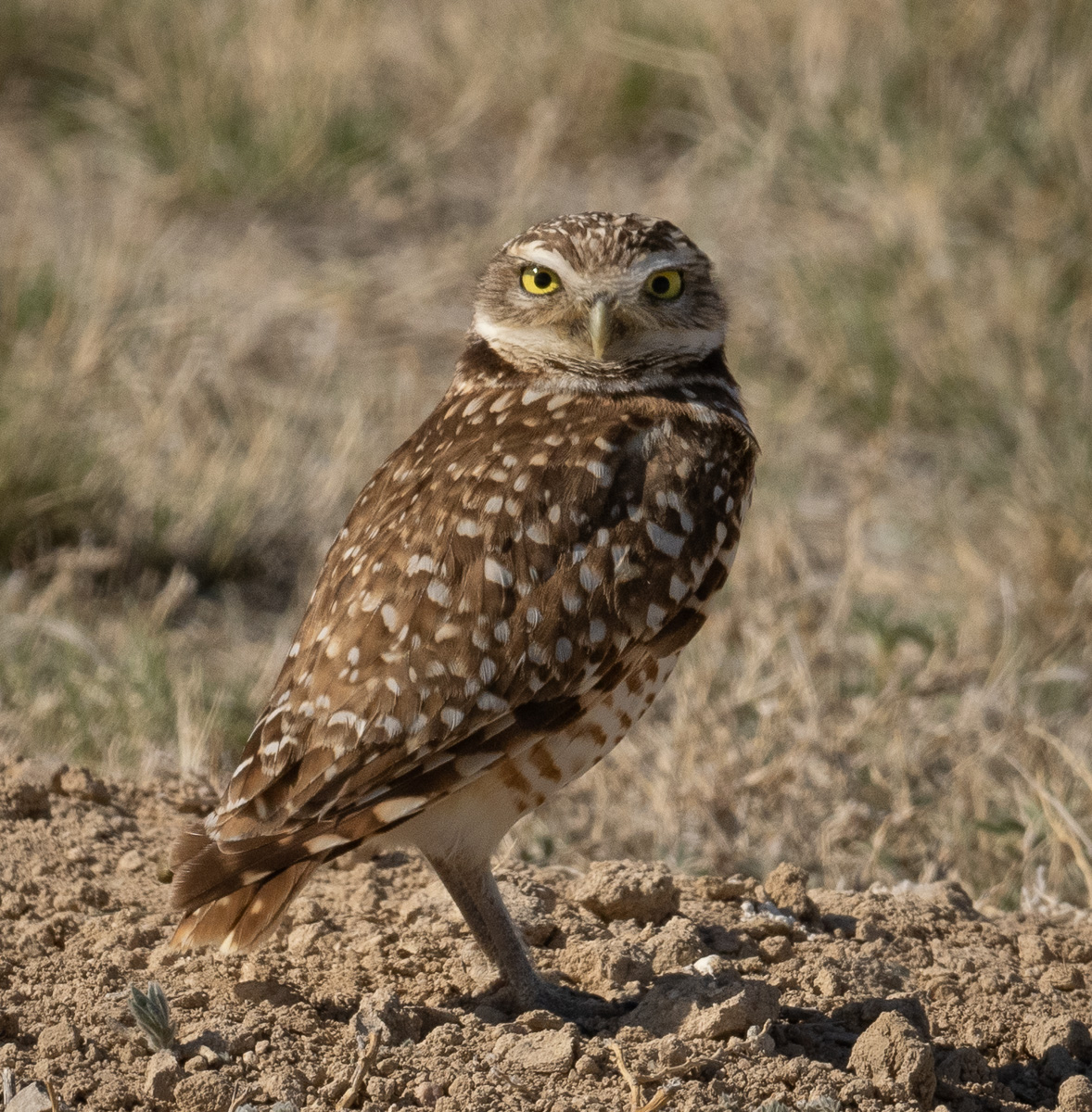
Unlike other owls, burrowing owls are often out during the day, although they tend to hunt mostly at dawn and dusk. I was out fairly early in the morning, having no idea that the prairie dog colony was here. Nor did I expect to see the owls. I’ve spent a lot of time scouring prairie dog colonies for these owls, often without success. This is the first time I’ve spotted the owls before seeing a prairie dog.
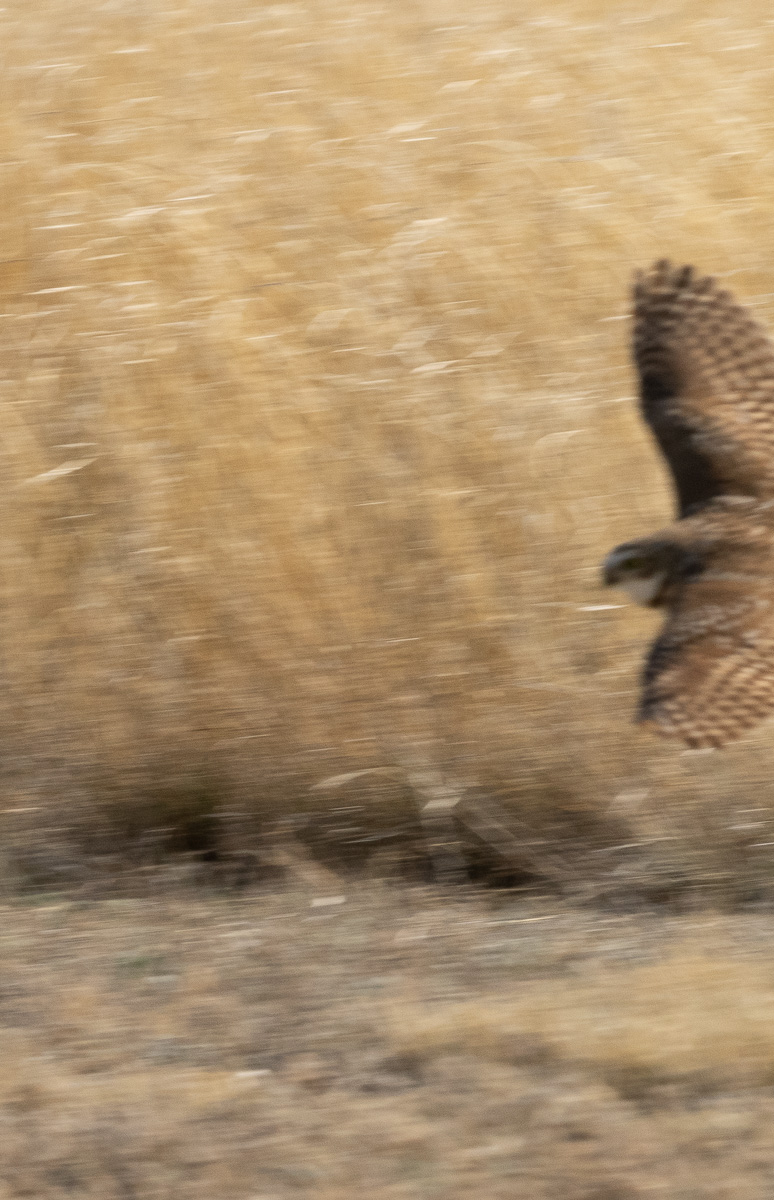
Safety in numbers ensures that prairie dogs survive, but they need to be vigilant. The least cautious individuals will end up as a meal for burrowing owls or coyotes.

Prairie dogs live in underground burrows in usually large colonies. They are welcome food items for coyotes and other predators. These images were obtained in Wind Cave National Park, in Wyoming.

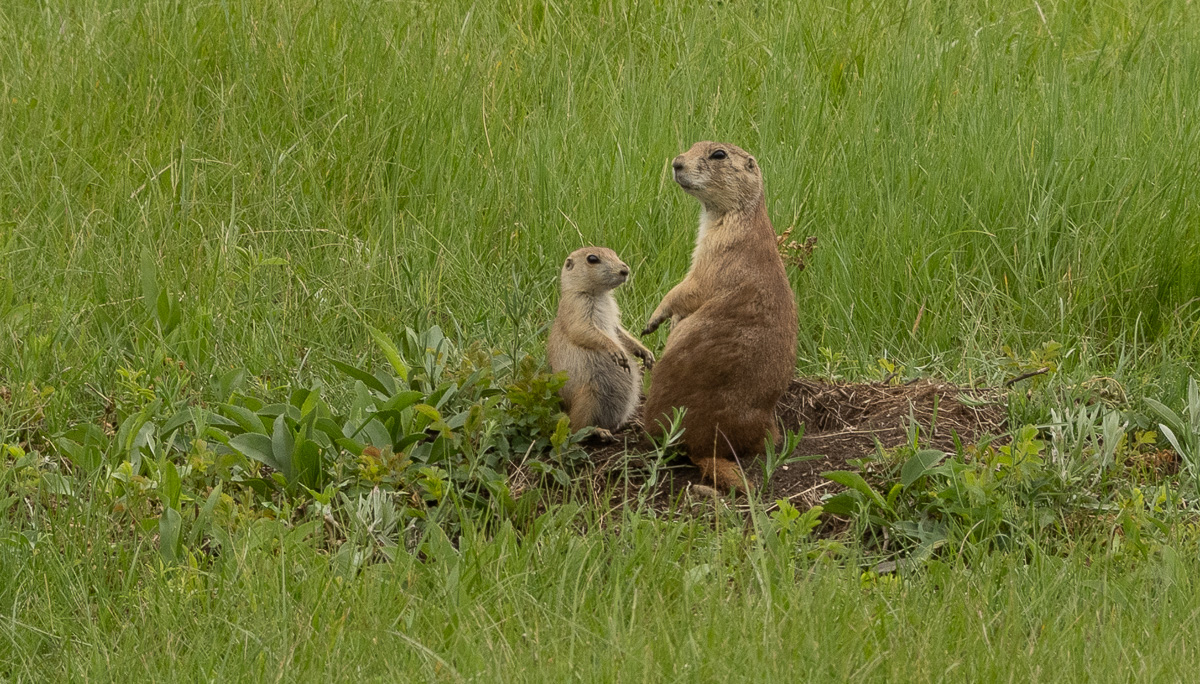
This adult prairie dog with youngster is sitting upright in characteristic sentinel mode. Facing in opposite directions, the pair have the field covered. Often, prairie dogs will sit atop mounds of soil for better visibility.

I was lucky to spot this coyote on the chase for a meal. I first saw it loping along the side of the road, so followed in the car. There was no one else about. It crossed the road, then went down into a dip. I missed the actual catch, but when the coyote came back into view, its prey was in its mouth. The black tail of this species of prairie dog is diagnostic.
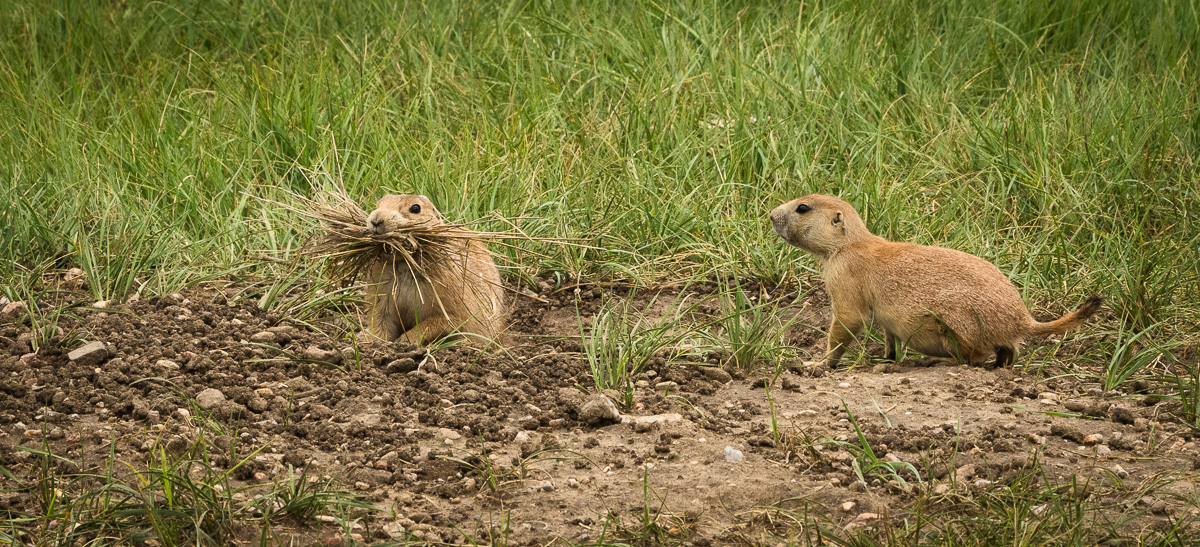
Another activity to watch, was this individual collecting nesting material to take down into the burrow. It is hard to imagine that there is room for a single additional straw in the mouth of this prairie dog. I was impressed that it could hold so much.

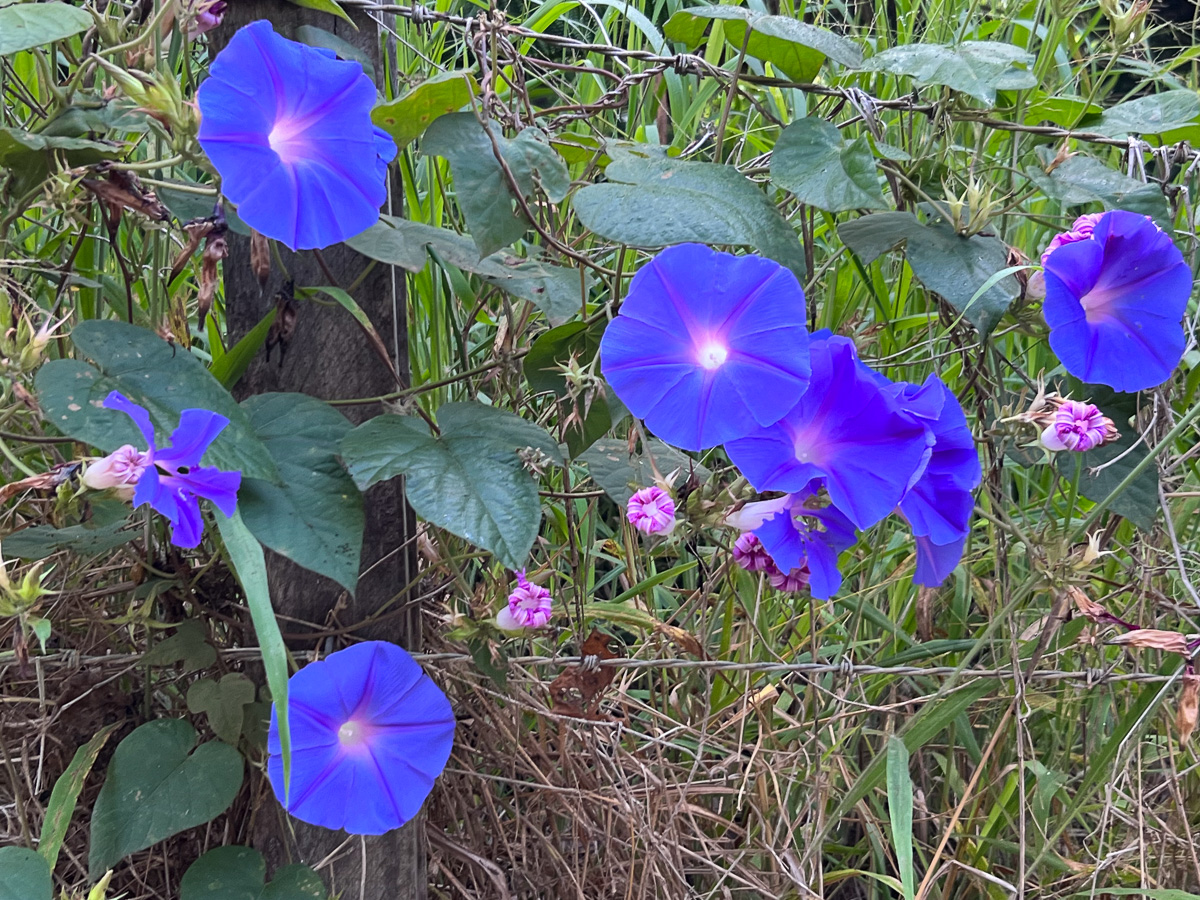
It requires a lot of energy to grow a rigid trunk that will allow a plant to outcompete its neighbours and capture the light it desperately needs to survive. The clever strategy adopted by climbing plants is to use these neighbours for support. Or maybe, as for this pretty, probably introduced member of the Convolvulaceae (Ipomoea indica) the climber gets a leg up using a human-built structure like this fence.
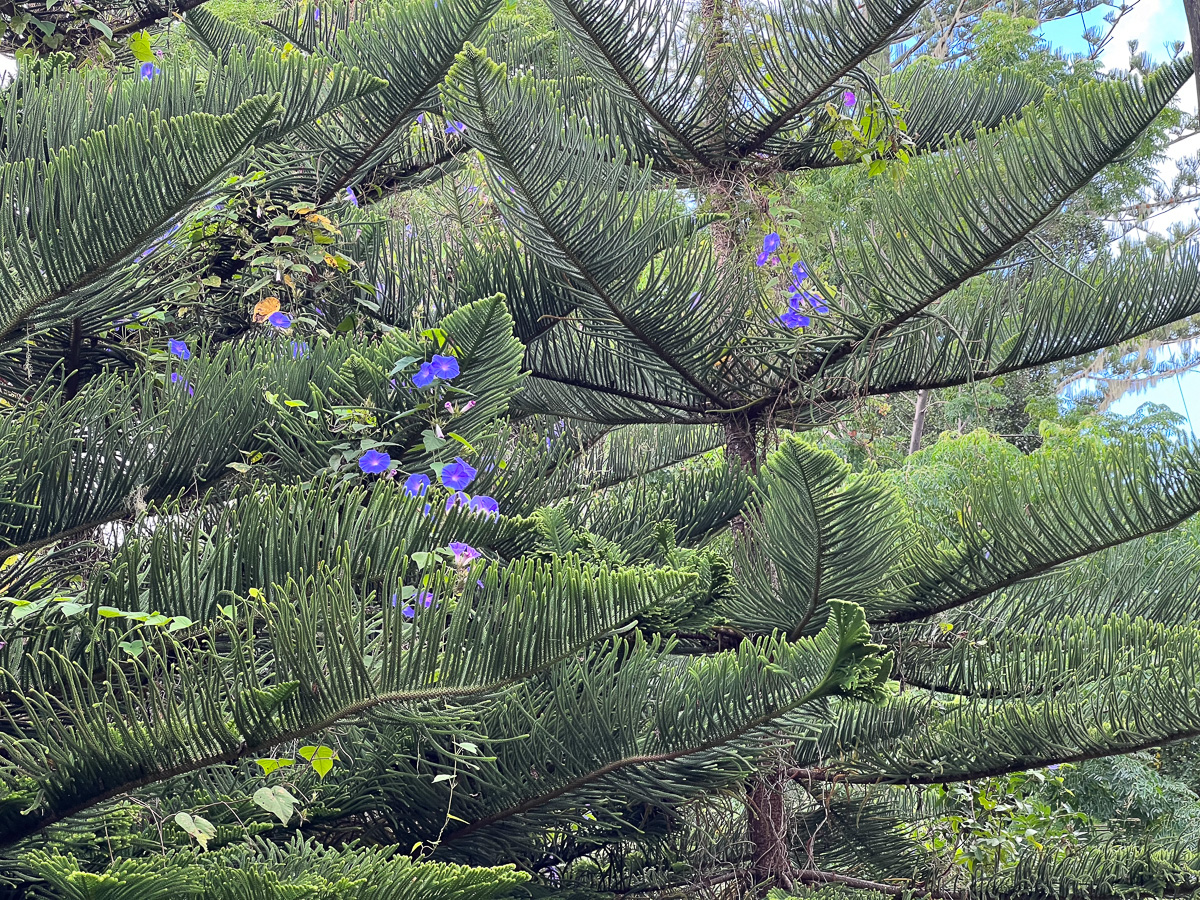
The Norfolk Island pine, with its straight, strong trunk, provides an effective ladder for I. indica. Solomon’s sinew, or wild wisteria (Callerya australis) is a native climber that also uses the Norfolk Island pine for support. The photograph below was taken in the Botanic Gardens. The prolific foliage of the climber gathers all the energy it needs to develop thick, strong vines to maintain a structure supported by the host trees.

Walking beneath the canopy, the vigour of Solomon’s sinew and other climbing plants is apparent from the thick vines that have developed through capturing the sun’s energy from high in the canopy of their host tree. When eventually the host tree dies and falls over, the vine sends out creeping stems to find another tree.

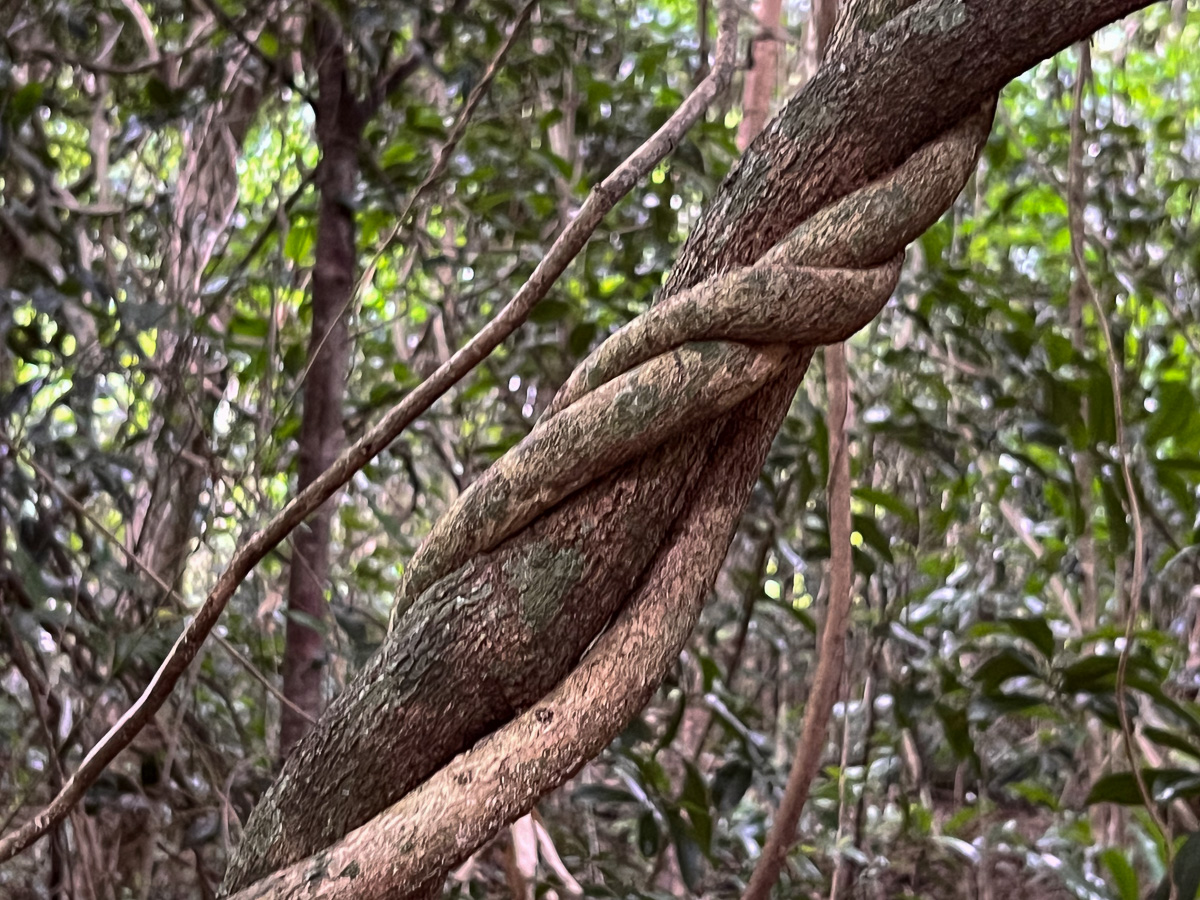
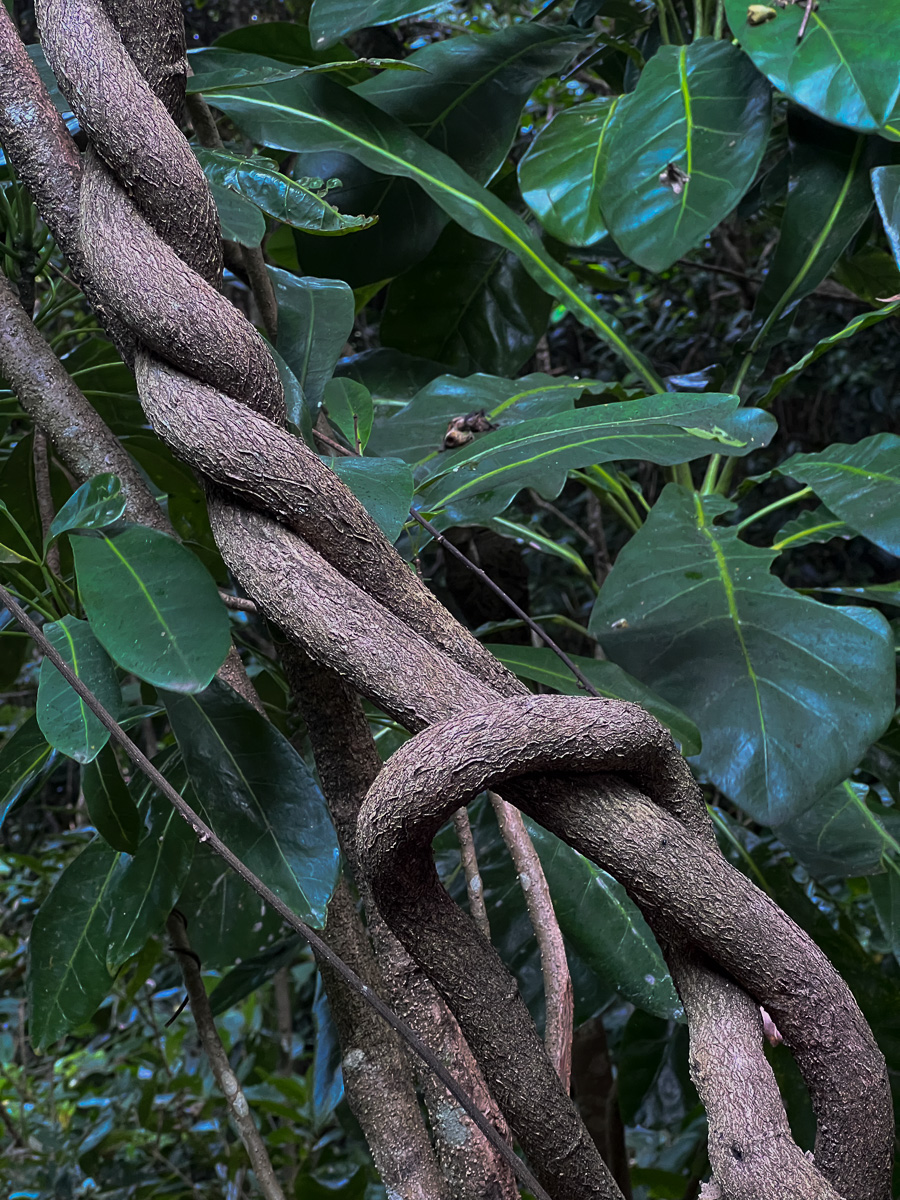

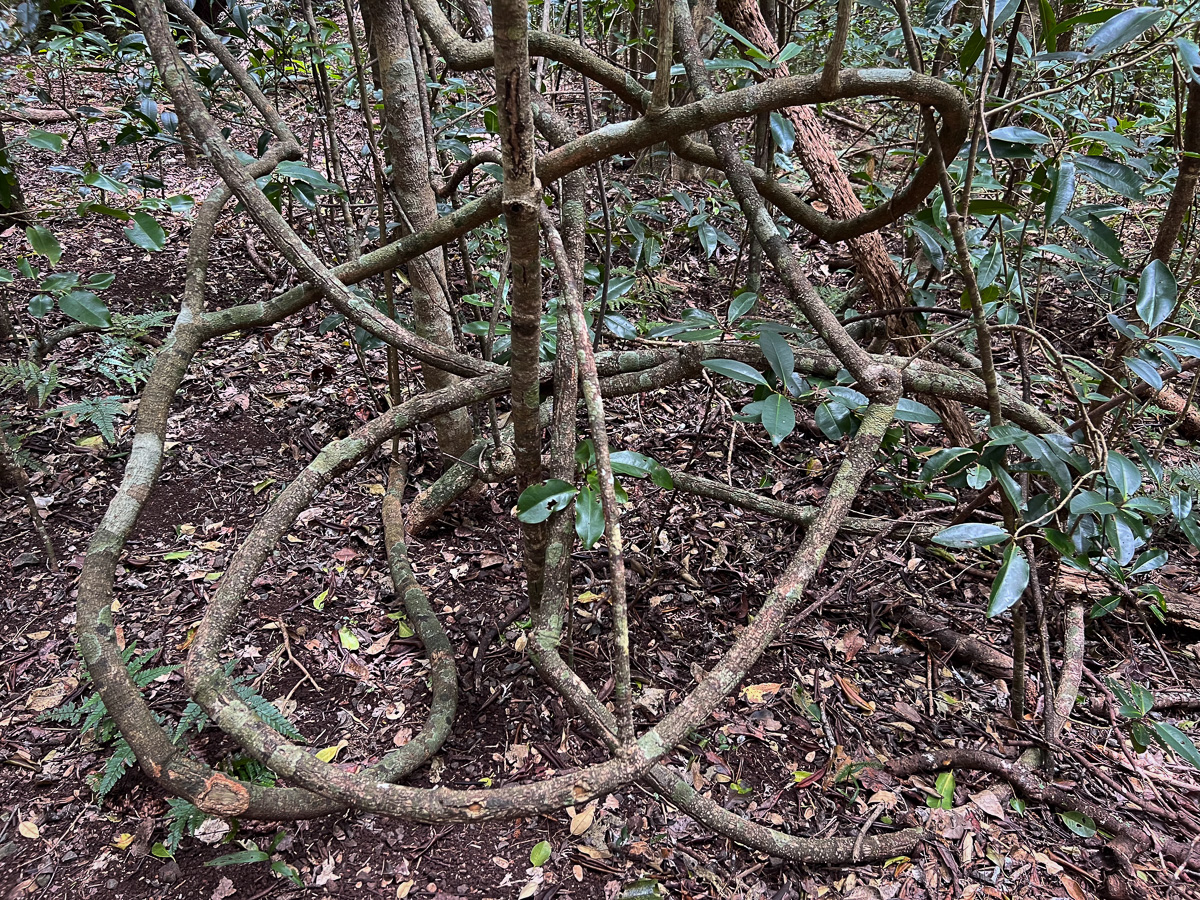
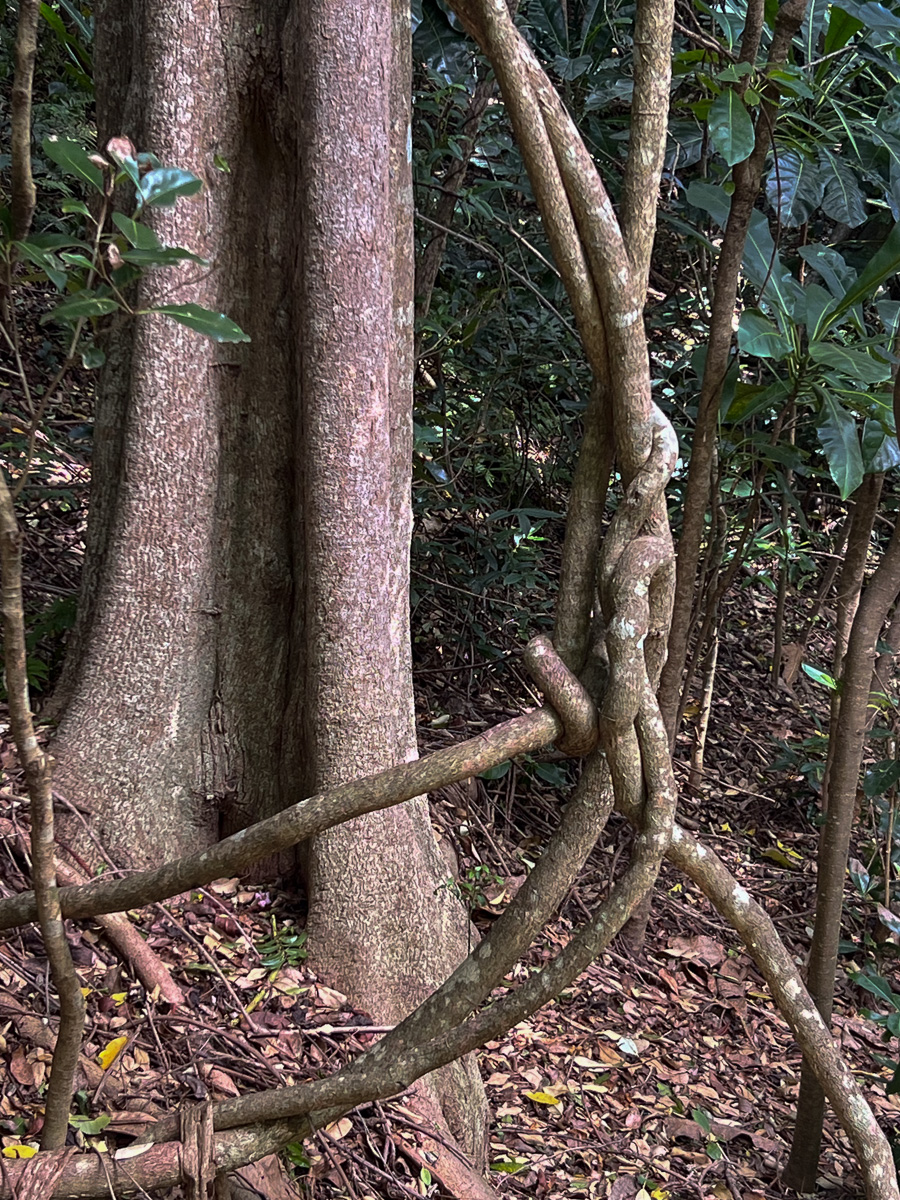
I wondered why these tangles of vines seem to be more common in tropical forests. Probably there are multiple factors. The trees grow faster than in temperate areas, so there is more incentive for other plants to use their structures to gain access to their height. The canopy is often dense, so understory plants have little access to sunlight essential for photosynthesis. Early accounts of the exploration of Norfolk Island tell of it being covered by impenetrable, thick forest.
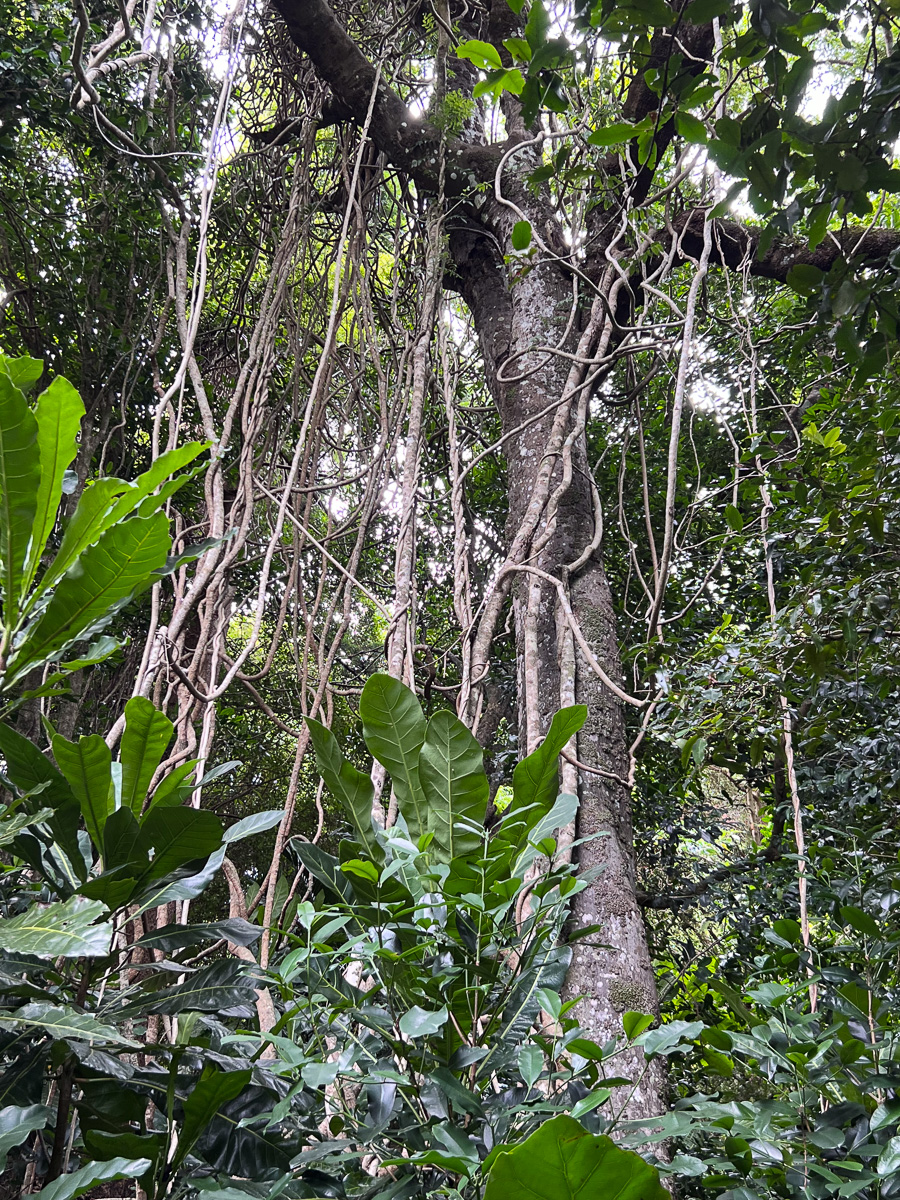
I have enjoyed spending sufficient time here to explore beneath the surface. Having inadvertently left my colour camera at home, my focus has shifted from bird photography to examining the forest more closely. It is hard to imagine how Norfolk Island appeared to the first Europeans to discover it, Captain James Cook and his crew in 1774. Earlier Polynesian visitors had barely ventured inland from Emily Bay, so left the interior mostly untouched. European and Pitcairn Island settlers cleared much of the land, including felling all the largest trees, so that exotic species could be planted and farmland established. Introduced weeds thrived in the newly created environment. Nevertheless, the National Park (which includes the older Botanic Garden) was set up in 1984 to preserve and restore the original habitat. It provides an experience that will increasingly resemble the original forest as it might have been prior to settlement.
Taranaki, in the southwest of the North Island of New Zealand, has been relatively isolated from the rest of the country, a knob that juts out into the Tasman Sea. In the centre of the knob, rises the majestic volcano of Taranaki Maunga. I think of the area as a more benign, version, both in terms of climate and soil fertility, of the South Island’s West Coast.
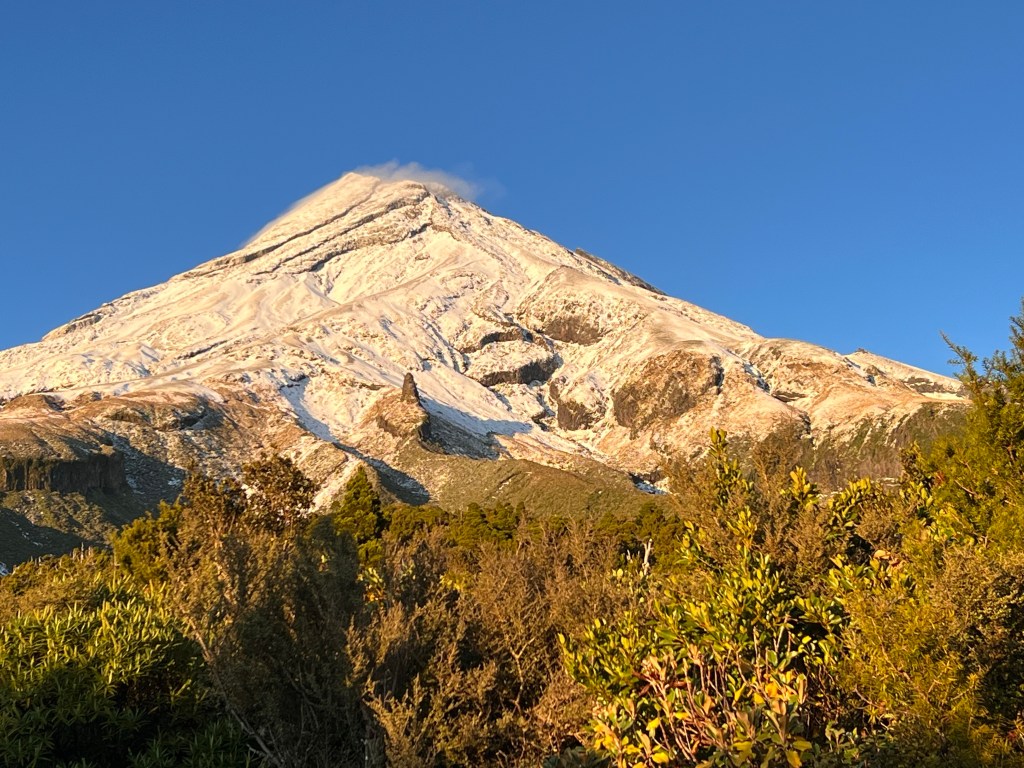
The high rainfall characteristic of both areas promotes lush natural forest, while its clearance has made way for a profitable dairying industry. A large, circular area around Taranaki Maunga stretching some ten kilometers from the peak in every direction, was preserved by the Forest Service in the last years of the nineteenth century. The abrupt transition to dairy pasture is visible from the air as an almost perfect circle.

Although when I first visited Taranaki it was relatively unknown, the area now receives a smattering of tourists, most of whom zero in on the mountain itself. In spite of dire warnings from the Department of Conservation deterring would be hikers with insufficient experience and equipment from attempting the climb, it is extremely popular. Social media posts on successful climbs in perfect weather attract hoards of aspirant climbers. In addition to the summit routes, there are many walks through the forest along tracks that make their way tortuously across the deep indentations running down the flanks of the volcano.


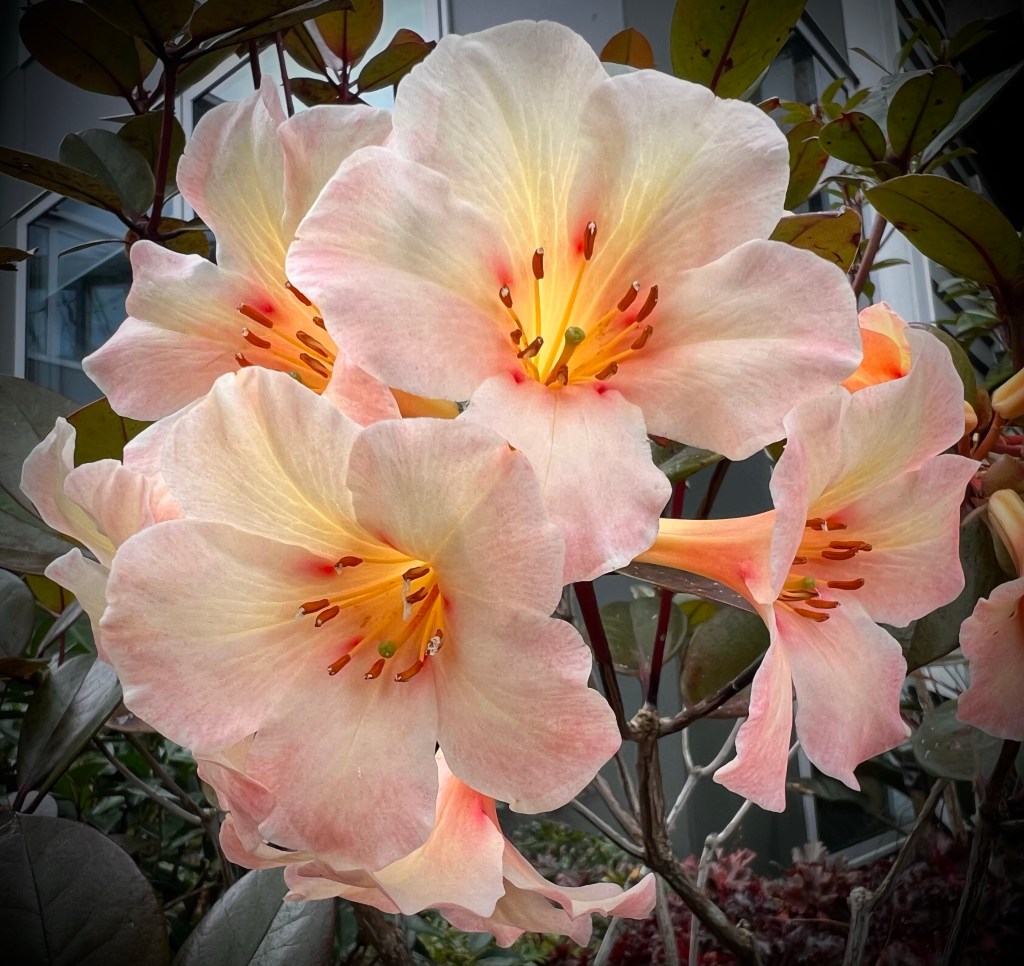
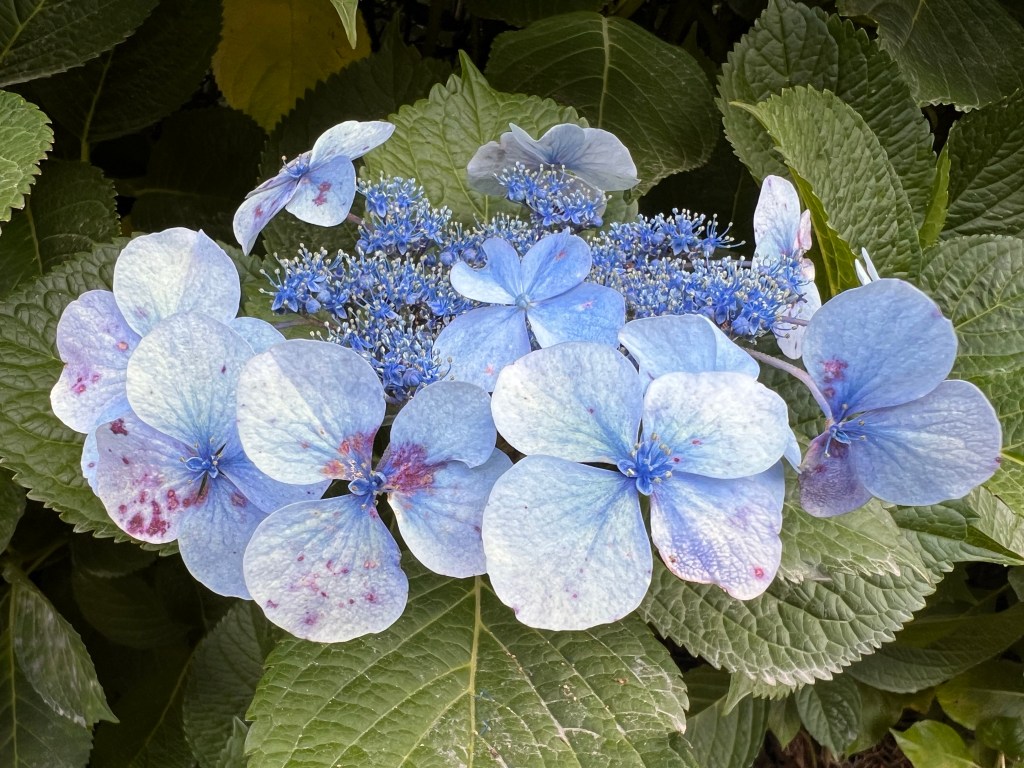
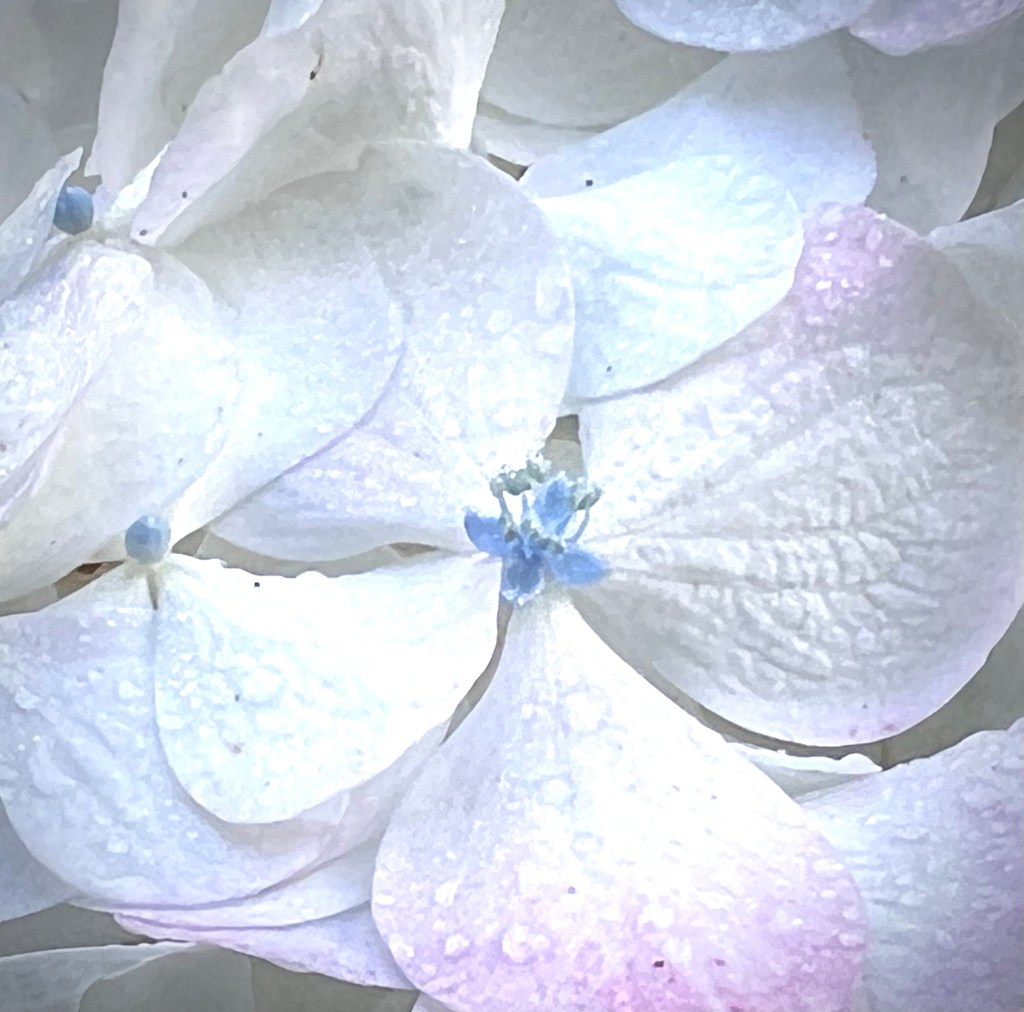
In addition to agriculture, Taranaki hosts a number of specialist nurseries growing exotic plants for gardens throughout New Zealand. There are also some beautiful gardens, such as Pukeiti at the base of the mountain where many rare and interesting plants can be found. It is famous for its collection of rhododendrons, many of them grown old and seeding naturally into the lightly managed forest of natives and exotics. My visit was too late in the season to see many flowers. However, in sheltered areas near the main building, a collection of vireyas flowers all year round. Hydrangeas were still flowering too, providing another subject for my camera.
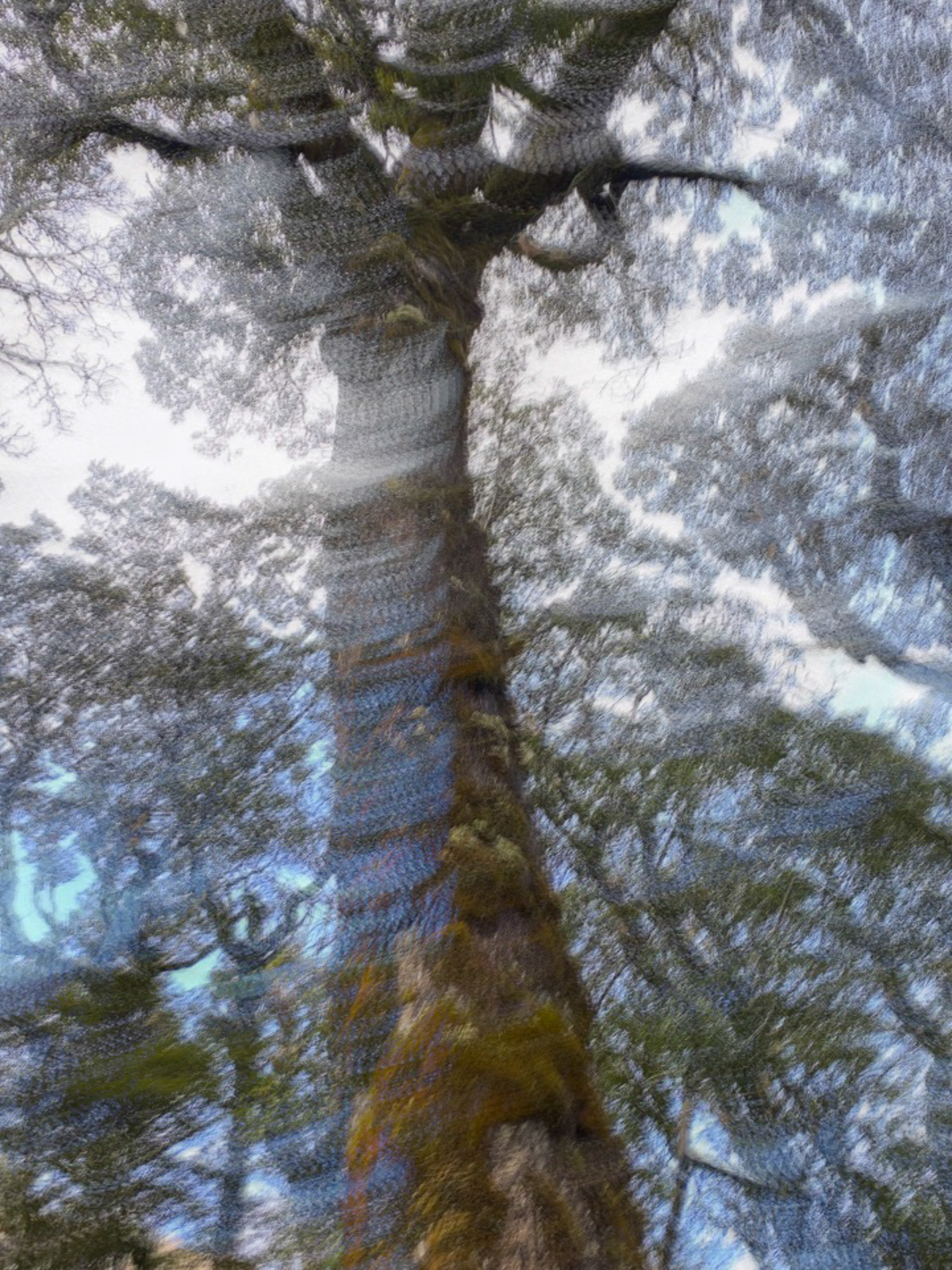
I love trees and have attributed personality to this specimen in beech forest at Arthur’s Pass National Park. Playing with iPhone apps that produce a variety of creative effects allows me to experiment with camera movement. Many of the results are unexpected, but with practise, sometimes I manage to create the effects that I’m after.
Of the places I visit when I am in California, the bristlecone pine groves high in the White Mountains call me back most often. Usually I spend several months during the New Zealand winter camping and hiking in the mountains and deserts of the western United States. Last year, Covid put paid to that. Probably this year, too.
These trees survive in a hostile environment, a high altitude desert, growing ever so slowly. They die slowly, too. Standing trees may be thousands of years old and fallen timbers thousands more.
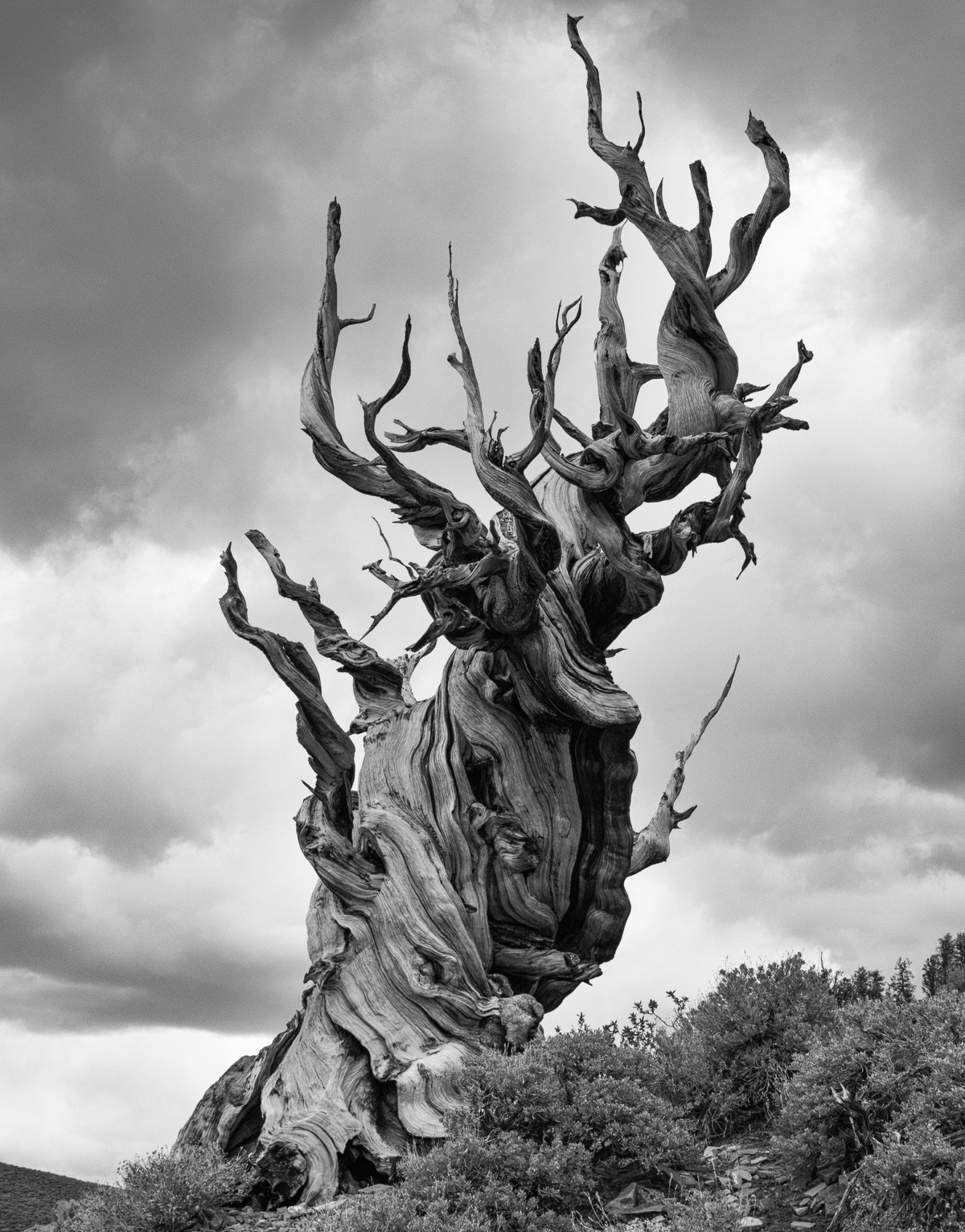
I made a photo book of these trees last year, a tribute to my heroes of the plant world, using images I have made over a number of years. I love the gnarled and twisted branches that reflect the hardships endured by trees growing at such high altitudes and subject to extremes of weather.
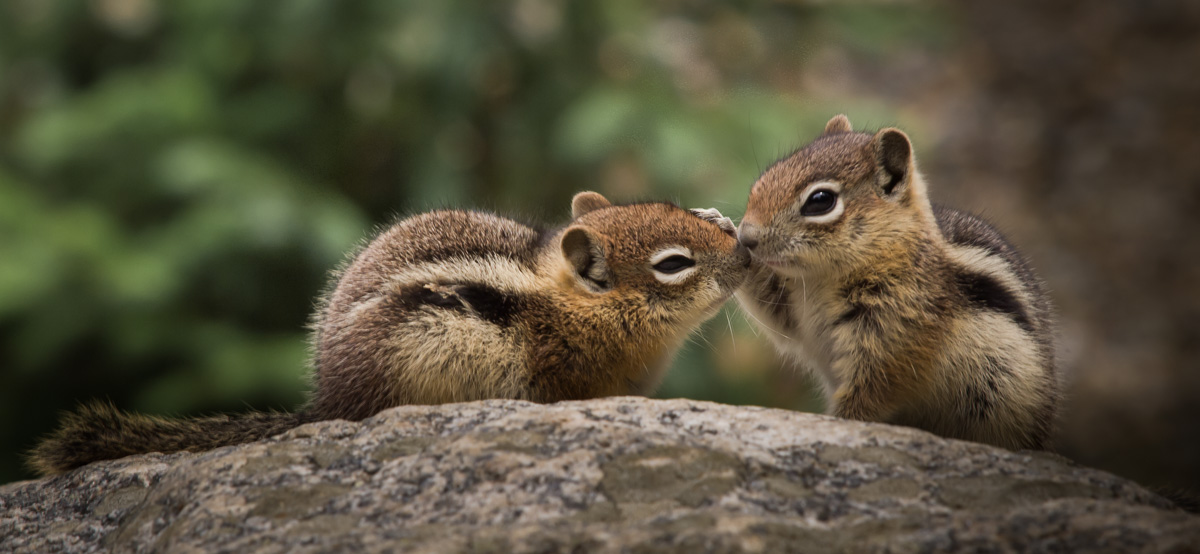
A few animals survive here too. The golden mantled ground squirrel can be found scavenging for cones in summer. In winter these small mammals hibernate to escape the cold. Clark’s nutcracker also feeds on seeds from these trees.

As bristlecone trees age, their protective outer bark becomes eroded so that eventually the cambium layer beneath can no longer function to transport water and nutrients through the tree. Many very old trees have just a narrow strip of bark connecting their roots to the canopy above, a lifeline that ensures their survival for maybe many years more.


Apart from the harsh climatic conditions endured by these trees, they grow on thin, limestone soils, which are very low in nutrients. These factors combine to make bristlecones in the White Mountains grow very slowly indeed so that they are the oldest trees in the world, some over 5000 years old.

Practicing the skills of photographing mammals
Nature photography is one of my passions, and my favourite photographic subjects are mammals. I say ‘mammals’ rather than ‘animals’ because I really do mean that, and don’t include birds, reptiles, insects, etc, which are all members of the animal kingdom. This may seem an odd preference for someone living in New Zealand where there are almost no native mammals. We have just two species of bats, and I have never even attempted to photograph these. They are not very common, nocturnal, and fast! We do have a number of introduced species that are established in the wild, but somehow they don’t interest me so much.
For me, then, opportunities to photograph mammals in the wild are restricted to trips overseas. I spend about 3 months each year camping and hiking in the western USA, and have visited other countries too. However, to improve my success rate in the wild, I practice on captive mammals, especially in wildlife parks and zoos that keep their mammals in natural-looking surroundings. Here in Christchurch, we have Orana Park, and the Willowbank Reserve. Both these places allow most of their larger animals, at least, to wander through outdoor areas that are visible to the public without the impediment of obtrusive fences and other man-made structures. So I try to make images of these captive mammals that look as natural as possible.
 polsnaturephotography