
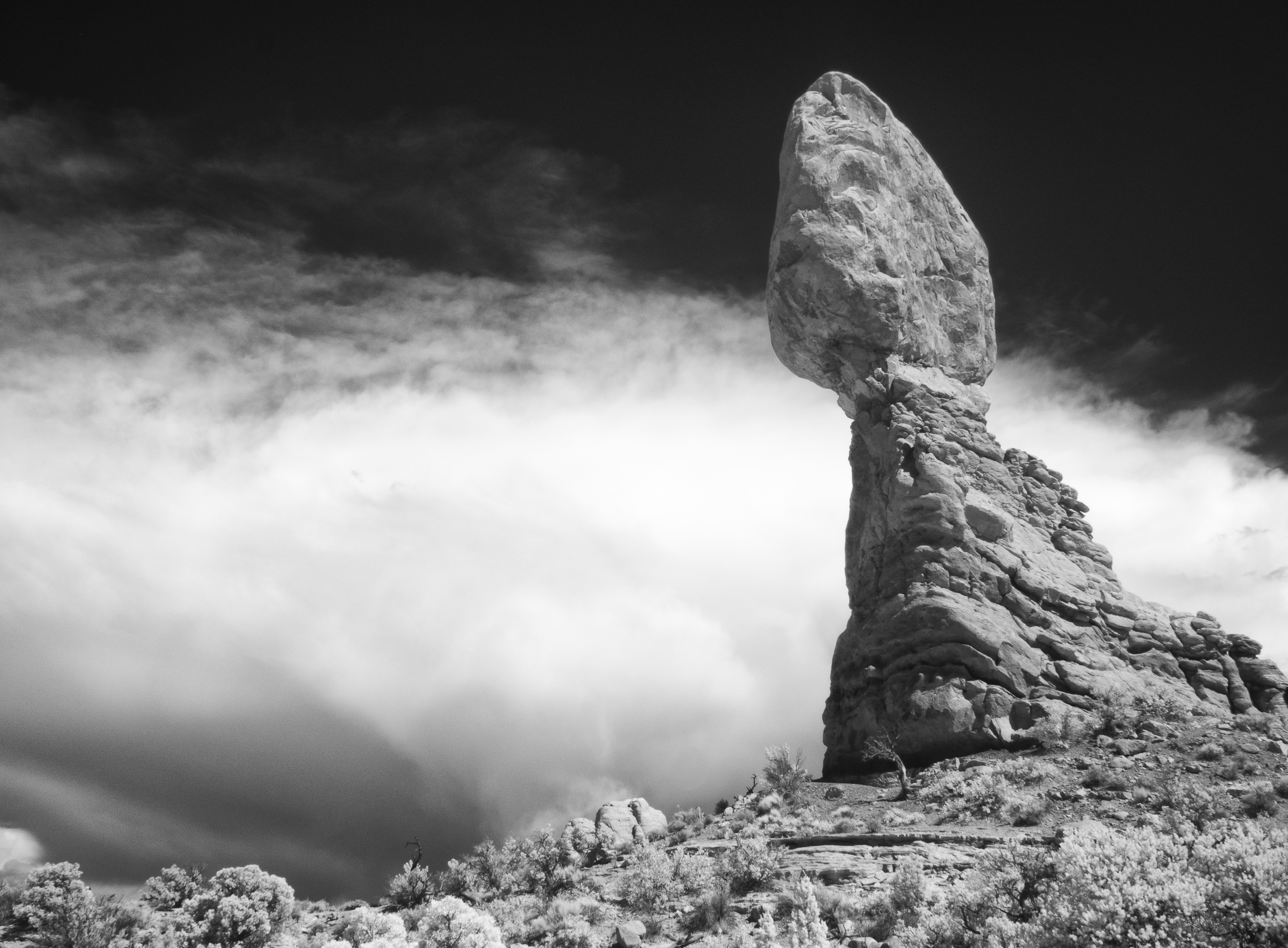
I began using an infrared camera to photograph landscapes. This is Balanced Rock in Arches National Park, Utah. I like the way the treatment lightens vegetation, sometimes giving an otherworldly look, which I find especially appropriate for cemeteries. I use a black and white conversion, for good contrast.
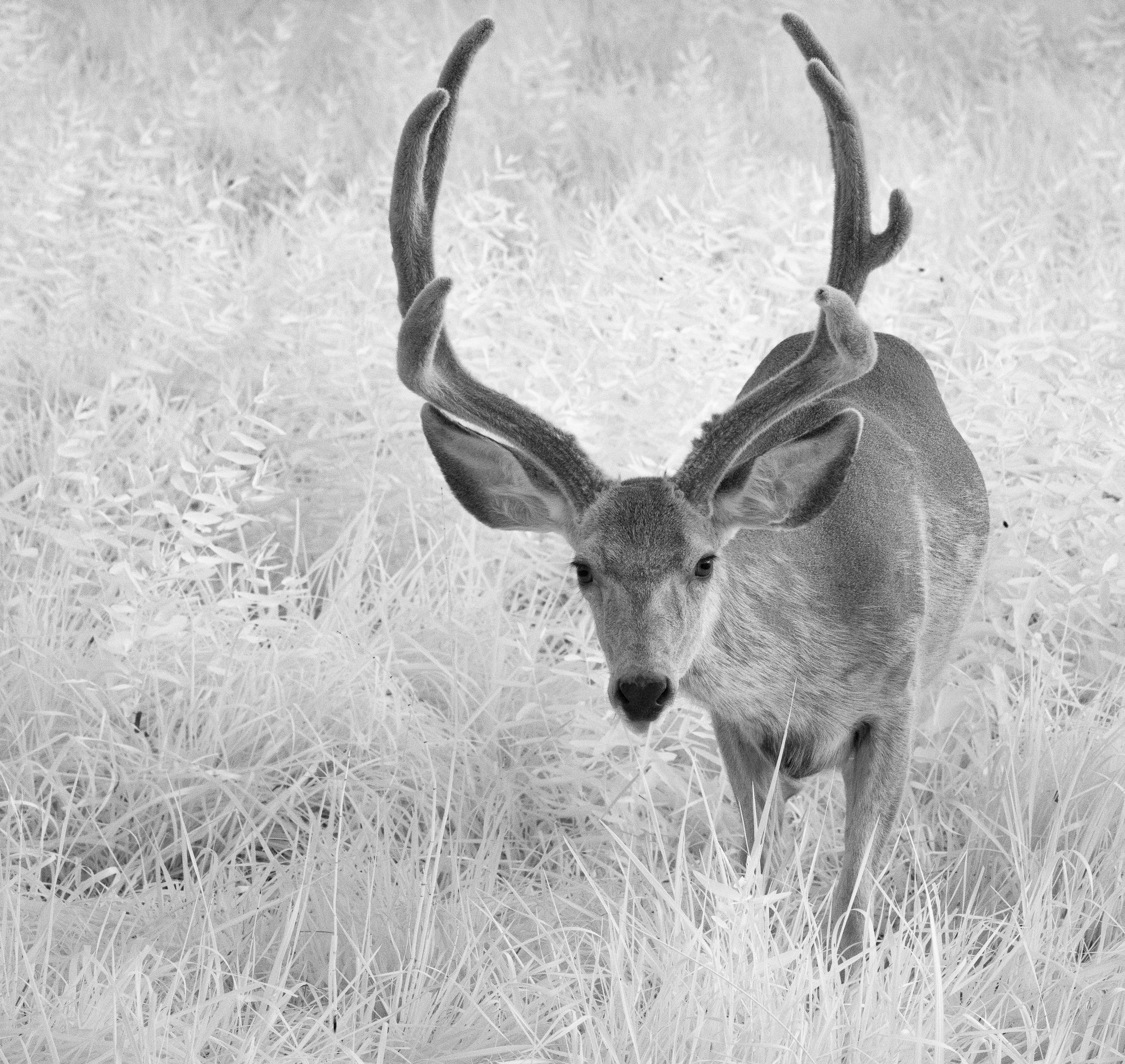
Then I began experimenting with animals, and liked what I got. This is a male mule deer in South Dakota. The grasses take on a delicate backdrop against which the animal stands out clearly.
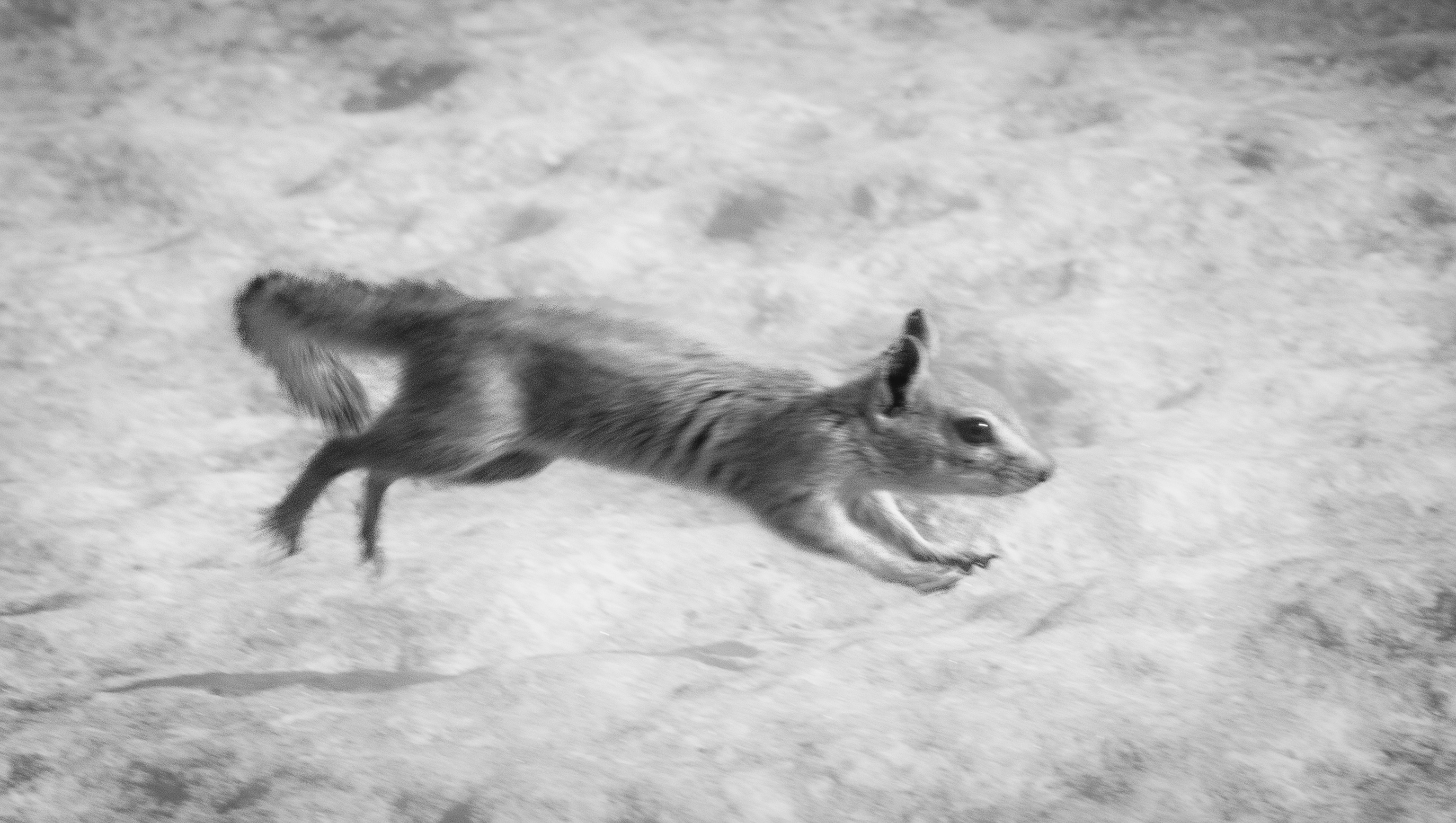
This chipmunk, caught in mid-leap, again stands out against a pale and blurred background.
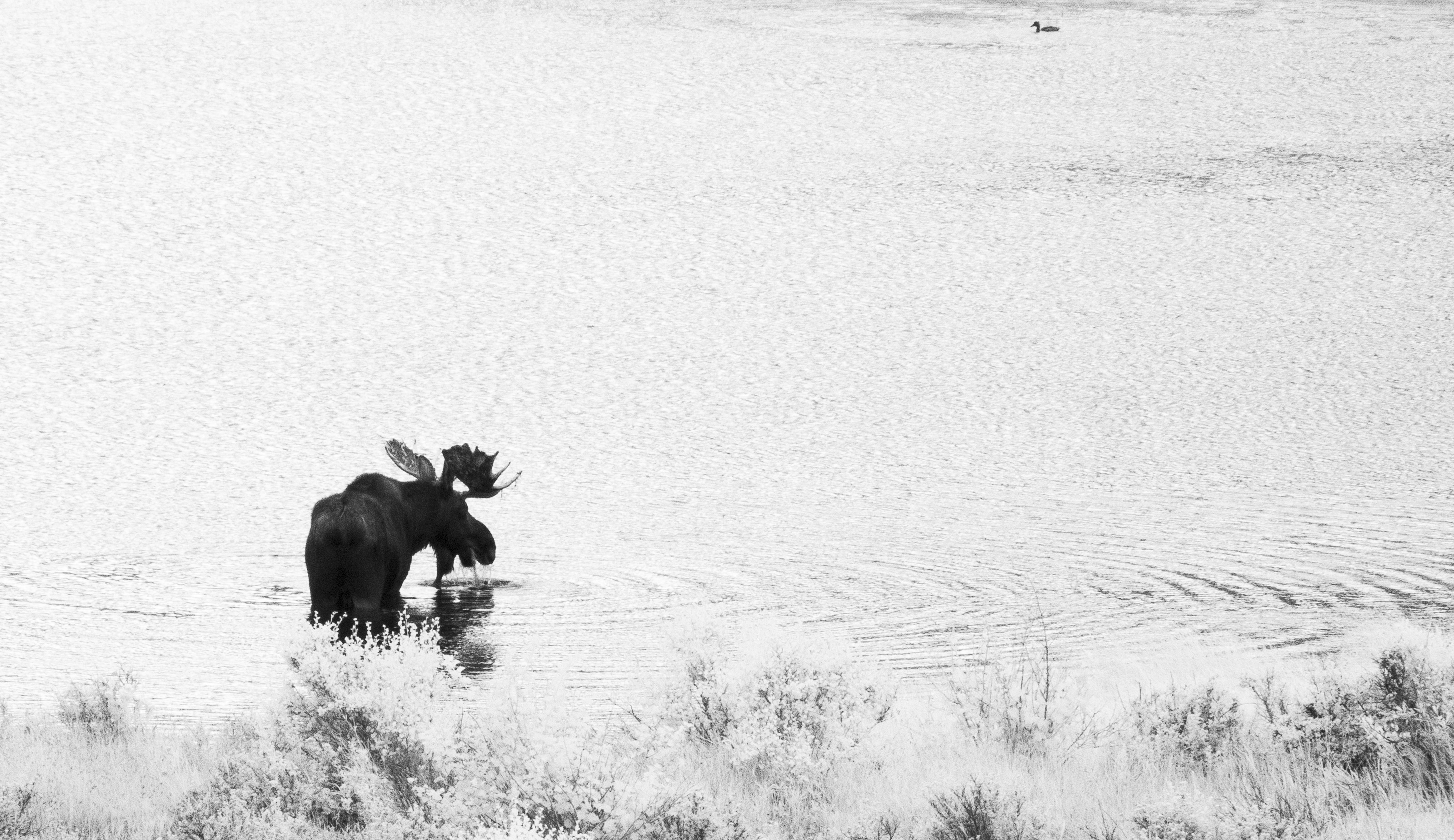
This next images was not intended to be in infrared. On that day, at Sheep Lake, in Rocky Mountain National Park, I saw a moose feeding, and needed my telephoto lens. The only camera I had with me at the time was the infrared converted OM Systems OM1, so I used it. Again, I liked what I got, the dark animal standing out against the light-coloured vegetation, and a tiny duck on the opposite edge of the frame.
I will experiment some more. I do love trees as well as animals, and using a lens baby with the infrared camera gave me this:
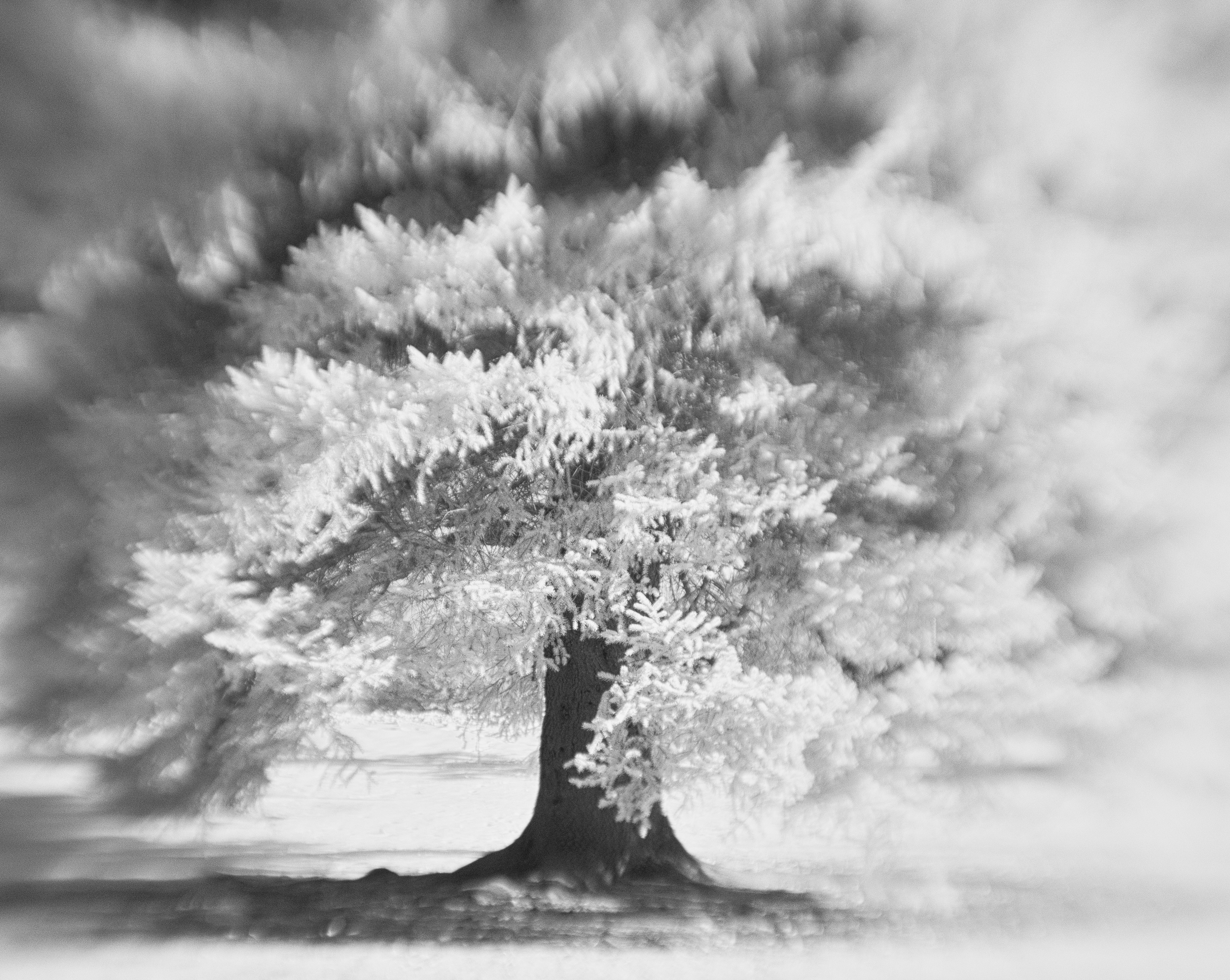
The tree is in Longmont, Colorado, and area that before European settlement would have been extensive prairie devoid of trees.
 polsnaturephotography