
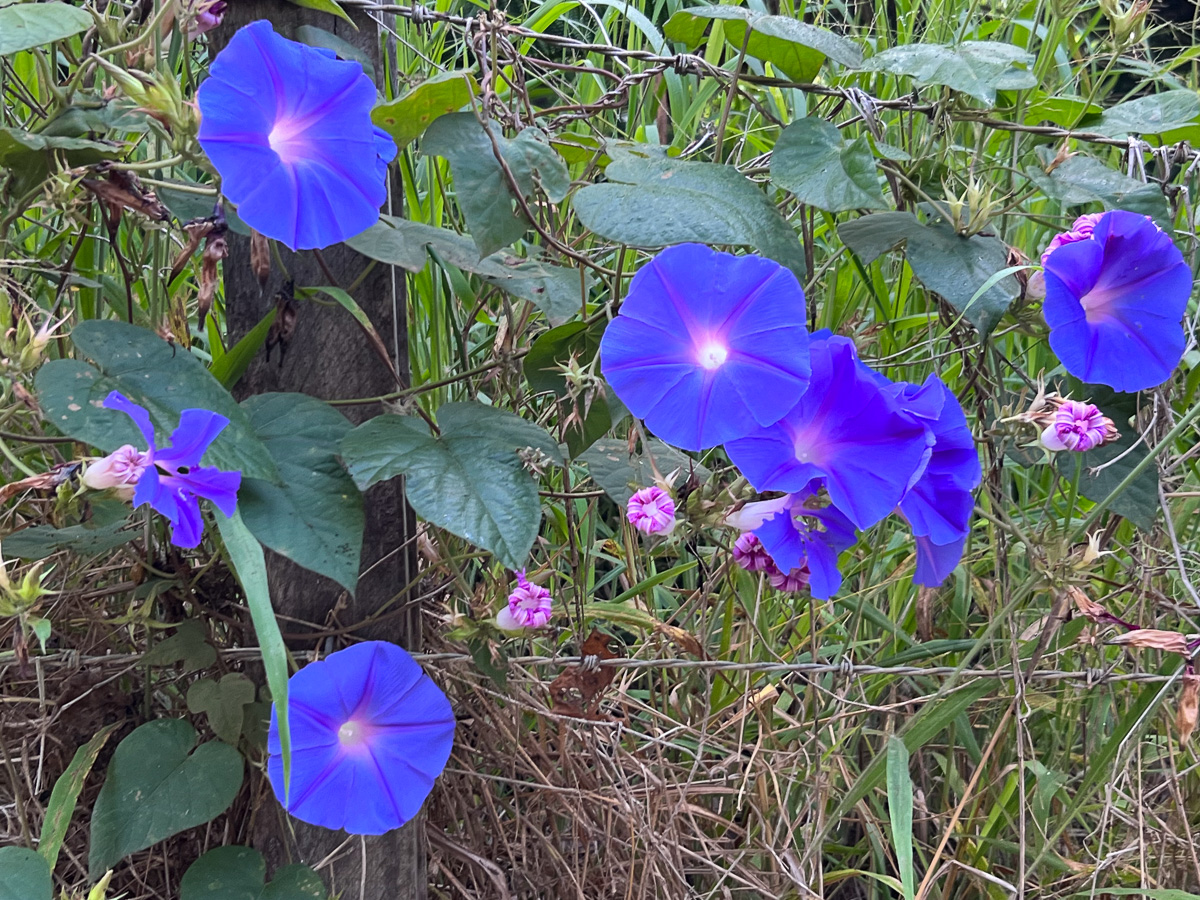
It requires a lot of energy to grow a rigid trunk that will allow a plant to outcompete its neighbours and capture the light it desperately needs to survive. The clever strategy adopted by climbing plants is to use these neighbours for support. Or maybe, as for this pretty, probably introduced member of the Convolvulaceae (Ipomoea indica) the climber gets a leg up using a human-built structure like this fence.
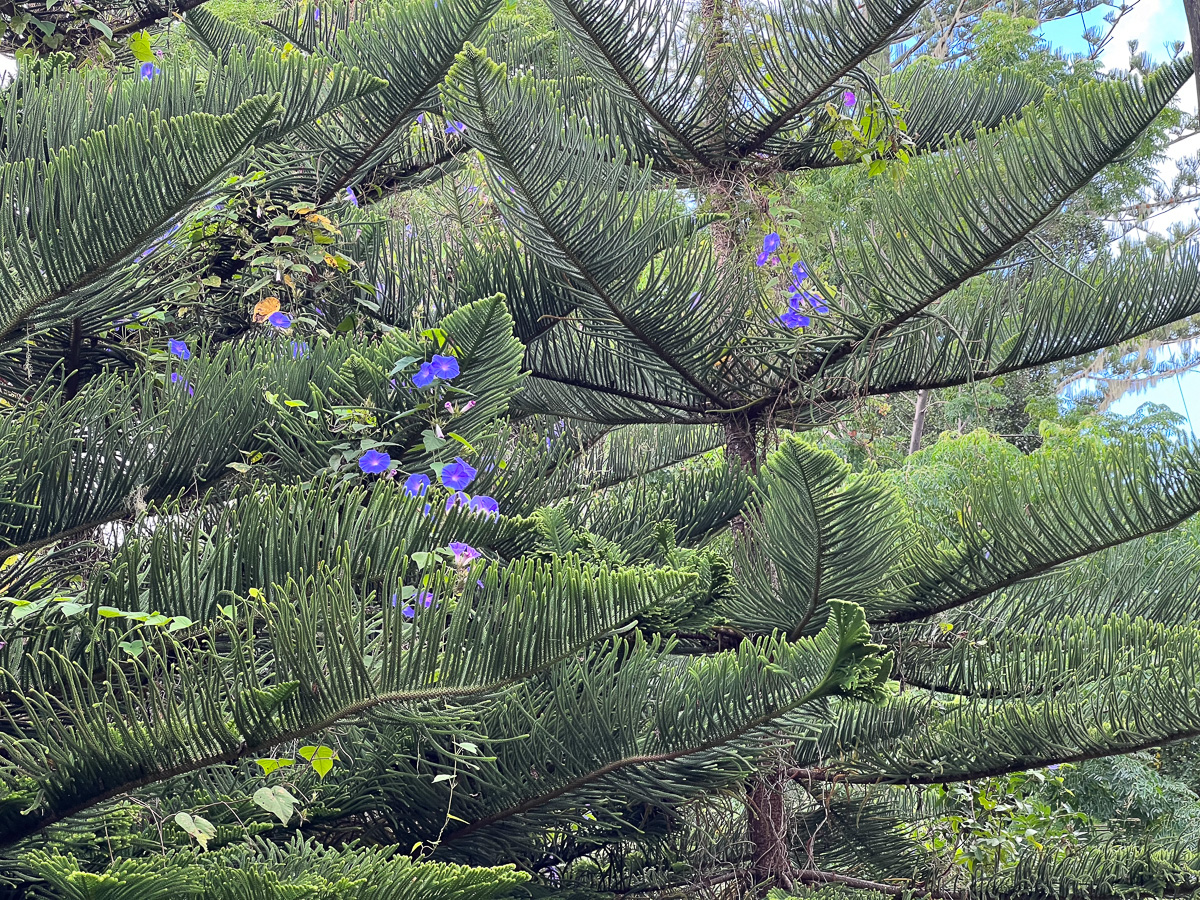
The Norfolk Island pine, with its straight, strong trunk, provides an effective ladder for I. indica. Solomon’s sinew, or wild wisteria (Callerya australis) is a native climber that also uses the Norfolk Island pine for support. The photograph below was taken in the Botanic Gardens. The prolific foliage of the climber gathers all the energy it needs to develop thick, strong vines to maintain a structure supported by the host trees.

Walking beneath the canopy, the vigour of Solomon’s sinew and other climbing plants is apparent from the thick vines that have developed through capturing the sun’s energy from high in the canopy of their host tree. When eventually the host tree dies and falls over, the vine sends out creeping stems to find another tree.

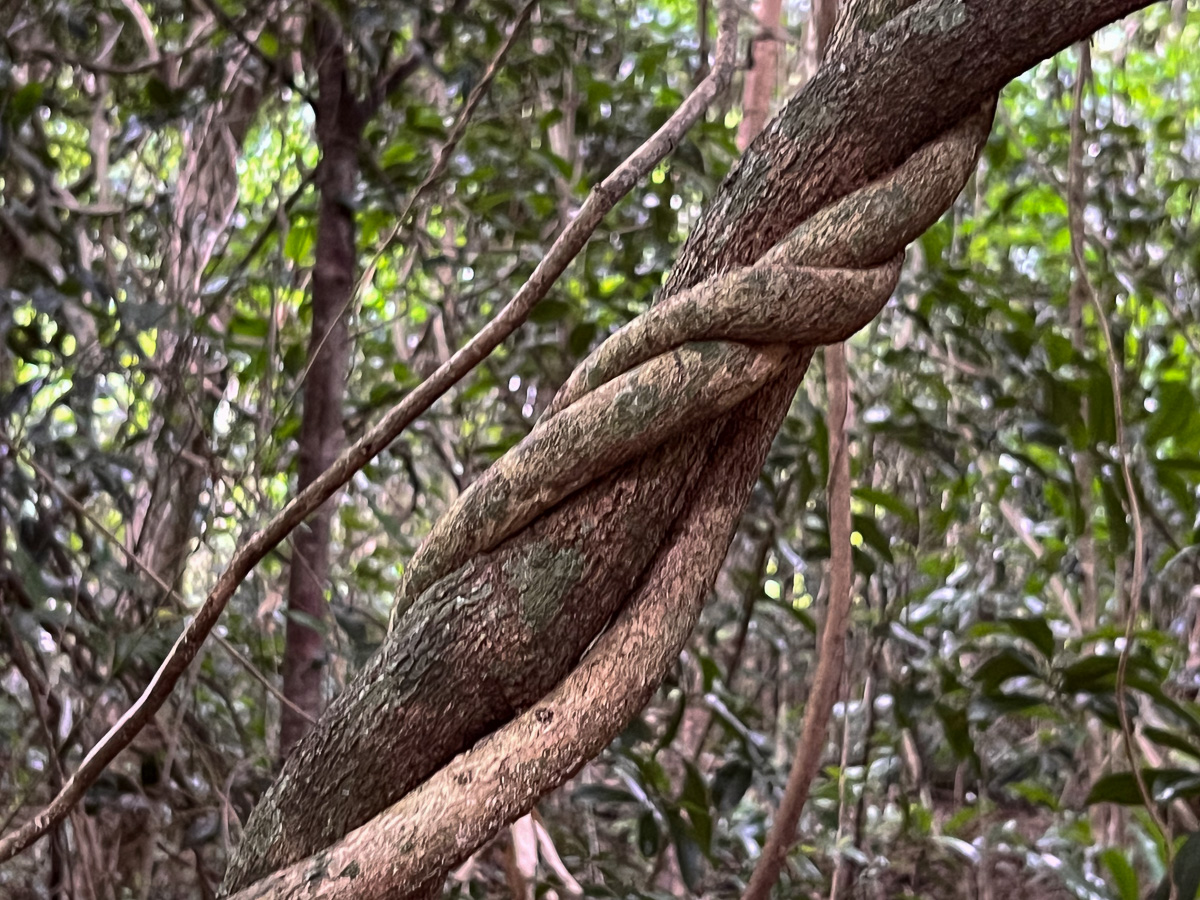
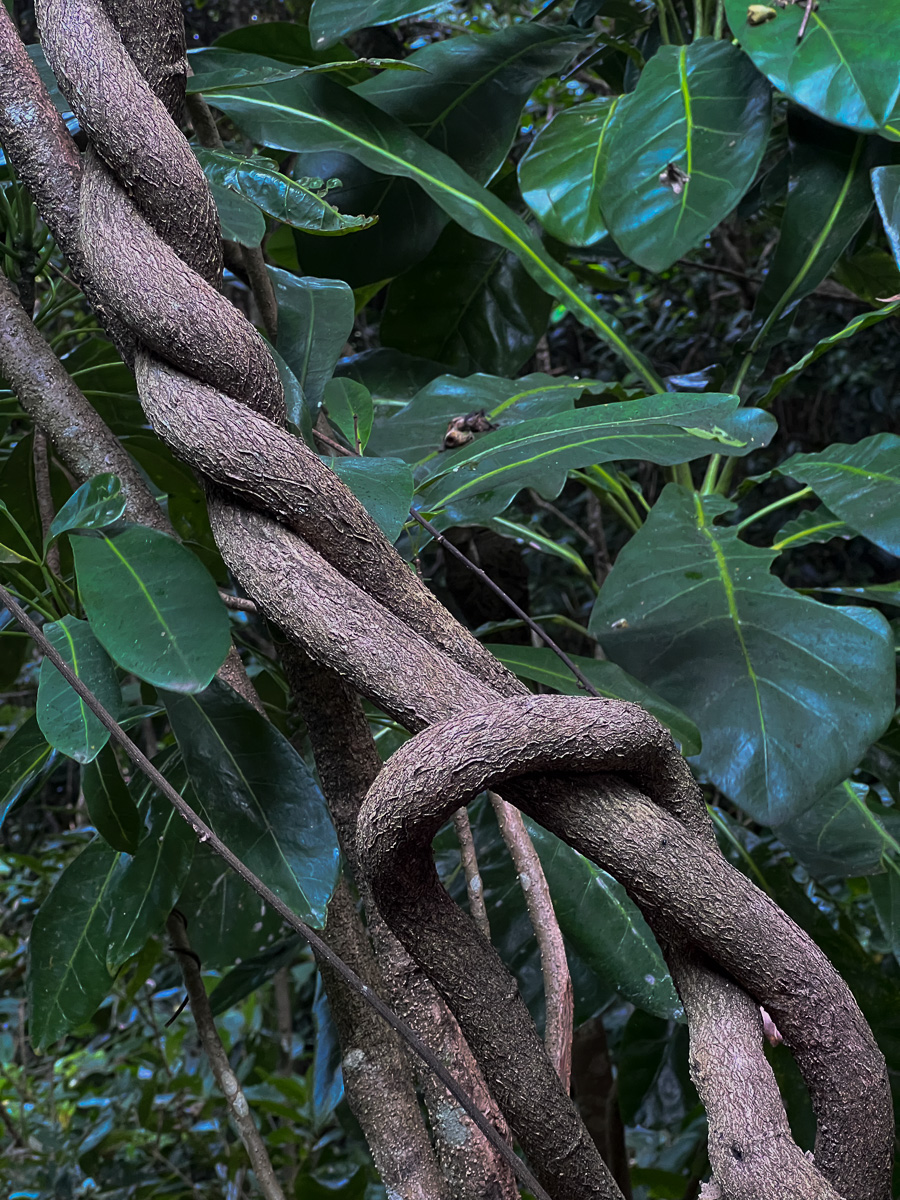

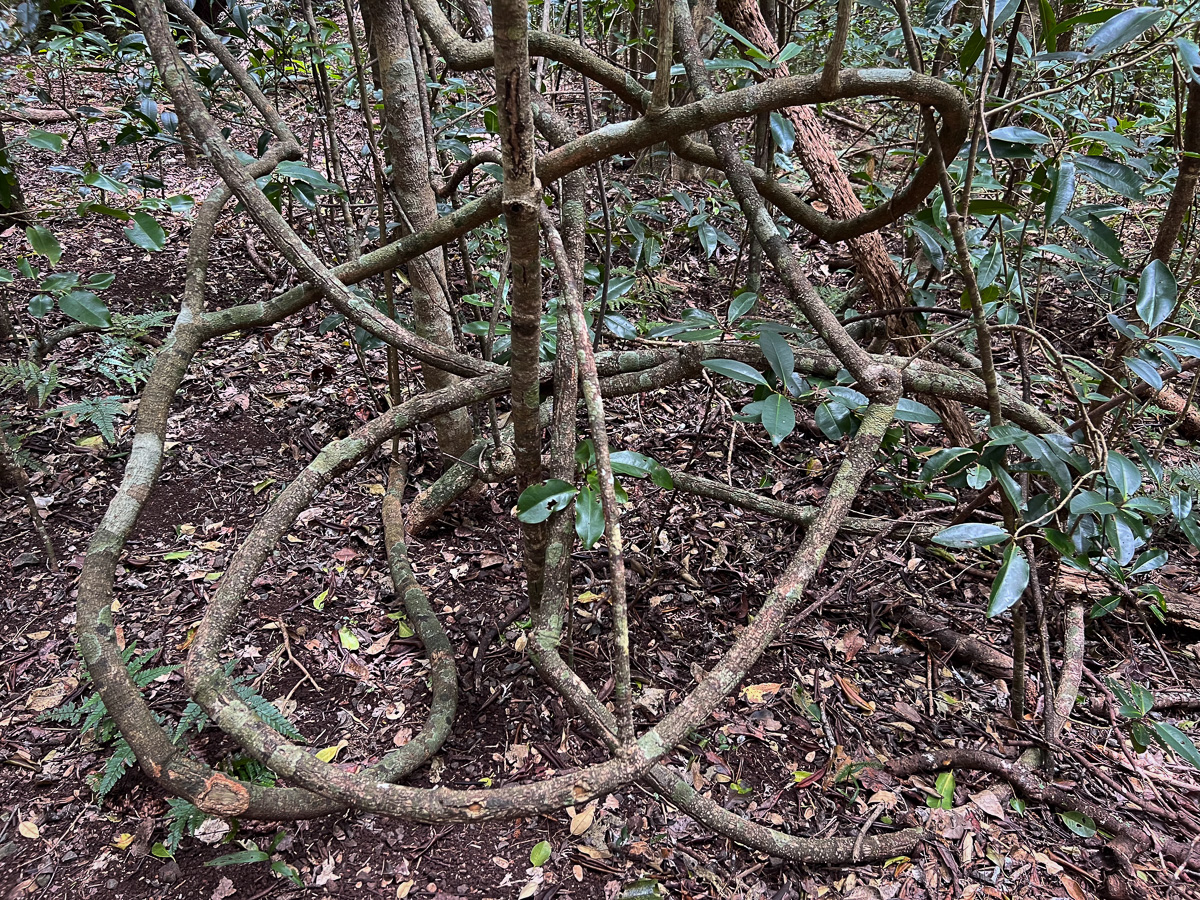
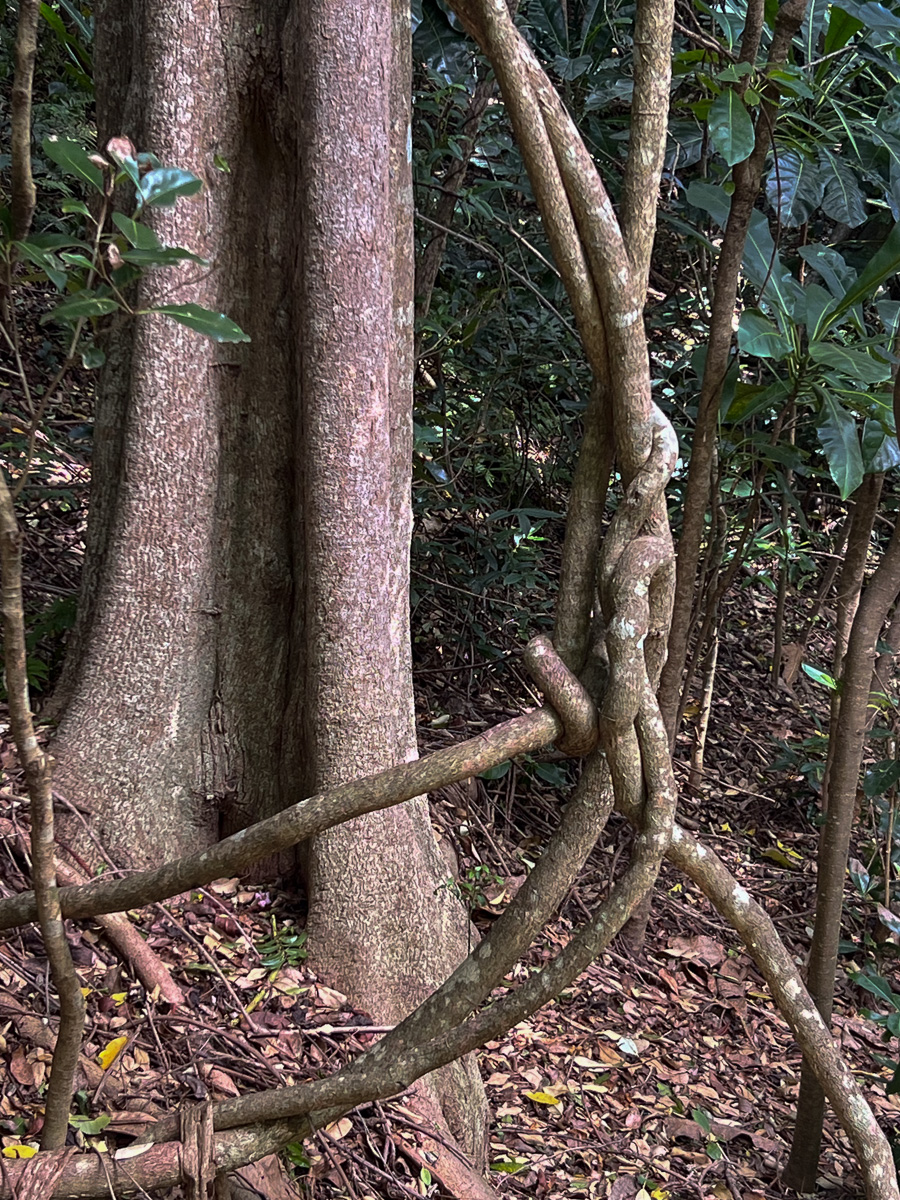
I wondered why these tangles of vines seem to be more common in tropical forests. Probably there are multiple factors. The trees grow faster than in temperate areas, so there is more incentive for other plants to use their structures to gain access to their height. The canopy is often dense, so understory plants have little access to sunlight essential for photosynthesis. Early accounts of the exploration of Norfolk Island tell of it being covered by impenetrable, thick forest.
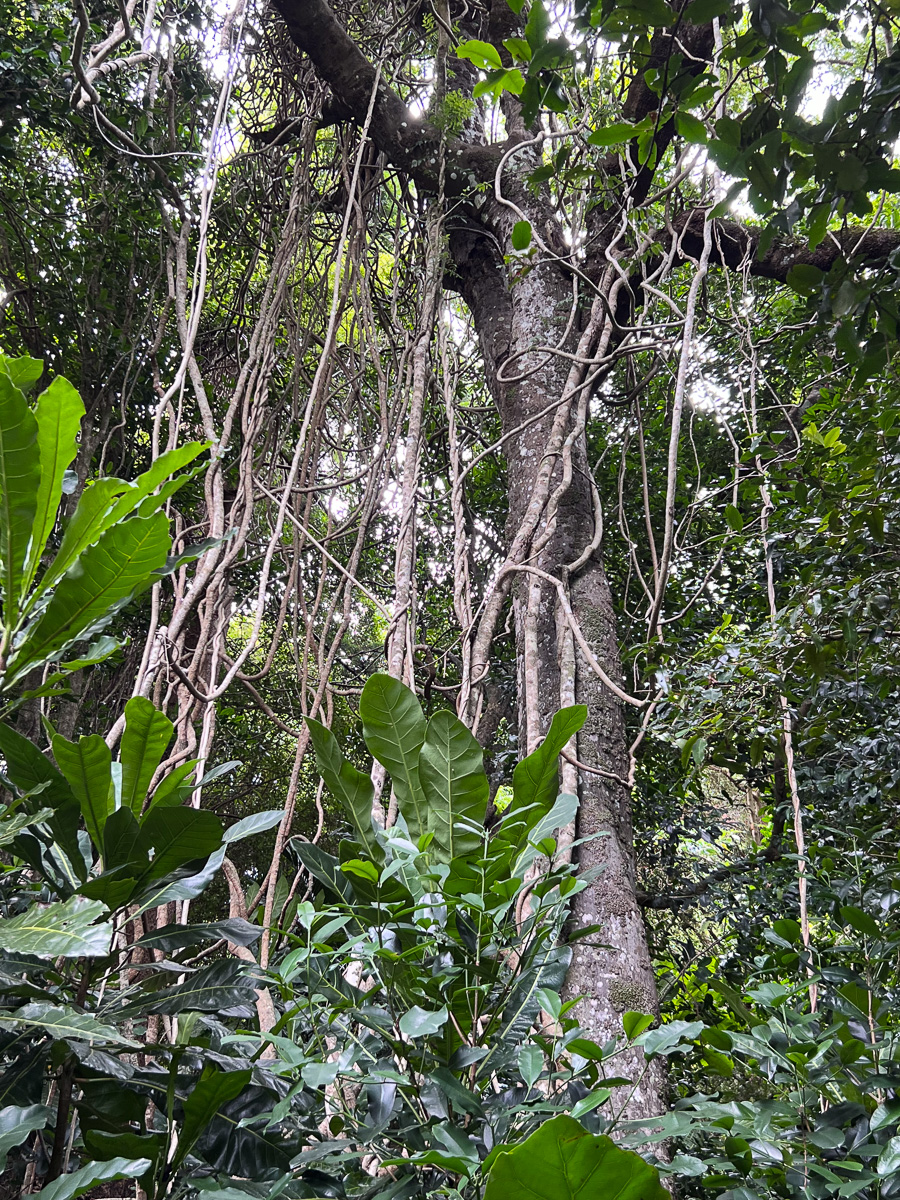
I have enjoyed spending sufficient time here to explore beneath the surface. Having inadvertently left my colour camera at home, my focus has shifted from bird photography to examining the forest more closely. It is hard to imagine how Norfolk Island appeared to the first Europeans to discover it, Captain James Cook and his crew in 1774. Earlier Polynesian visitors had barely ventured inland from Emily Bay, so left the interior mostly untouched. European and Pitcairn Island settlers cleared much of the land, including felling all the largest trees, so that exotic species could be planted and farmland established. Introduced weeds thrived in the newly created environment. Nevertheless, the National Park (which includes the older Botanic Garden) was set up in 1984 to preserve and restore the original habitat. It provides an experience that will increasingly resemble the original forest as it might have been prior to settlement.
 polsnaturephotography