
Lying on shore, seals look indolent. Reminiscent of lions that seem to spend more of their time lounging in the shade. However, seals spend lots of time actively swimming after food, especially when feeding pups, and earn their rest.
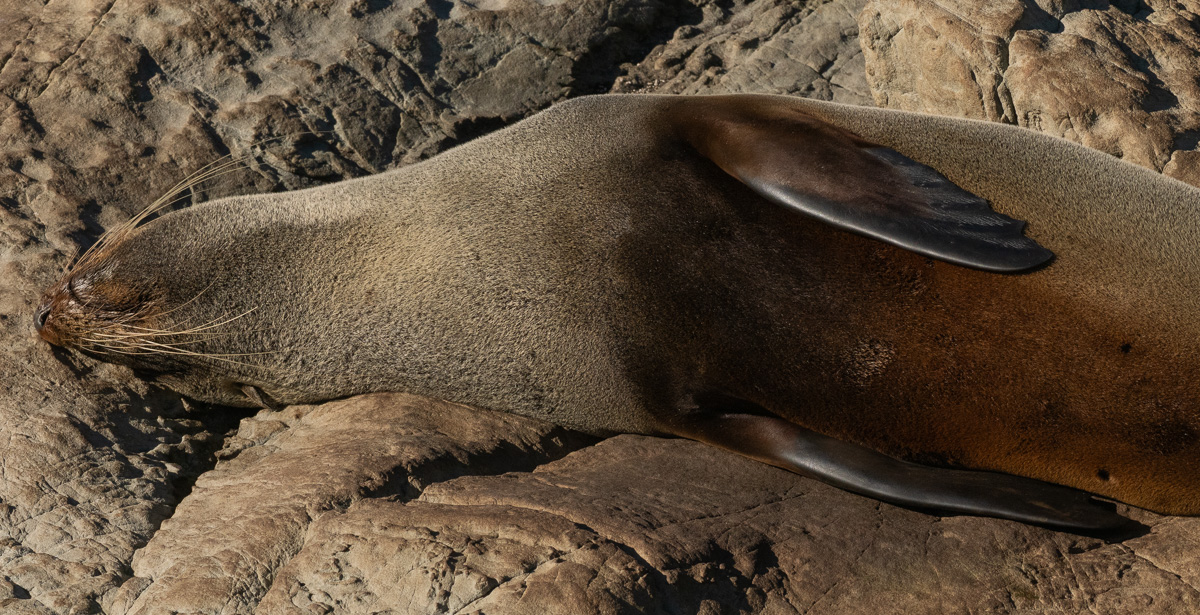

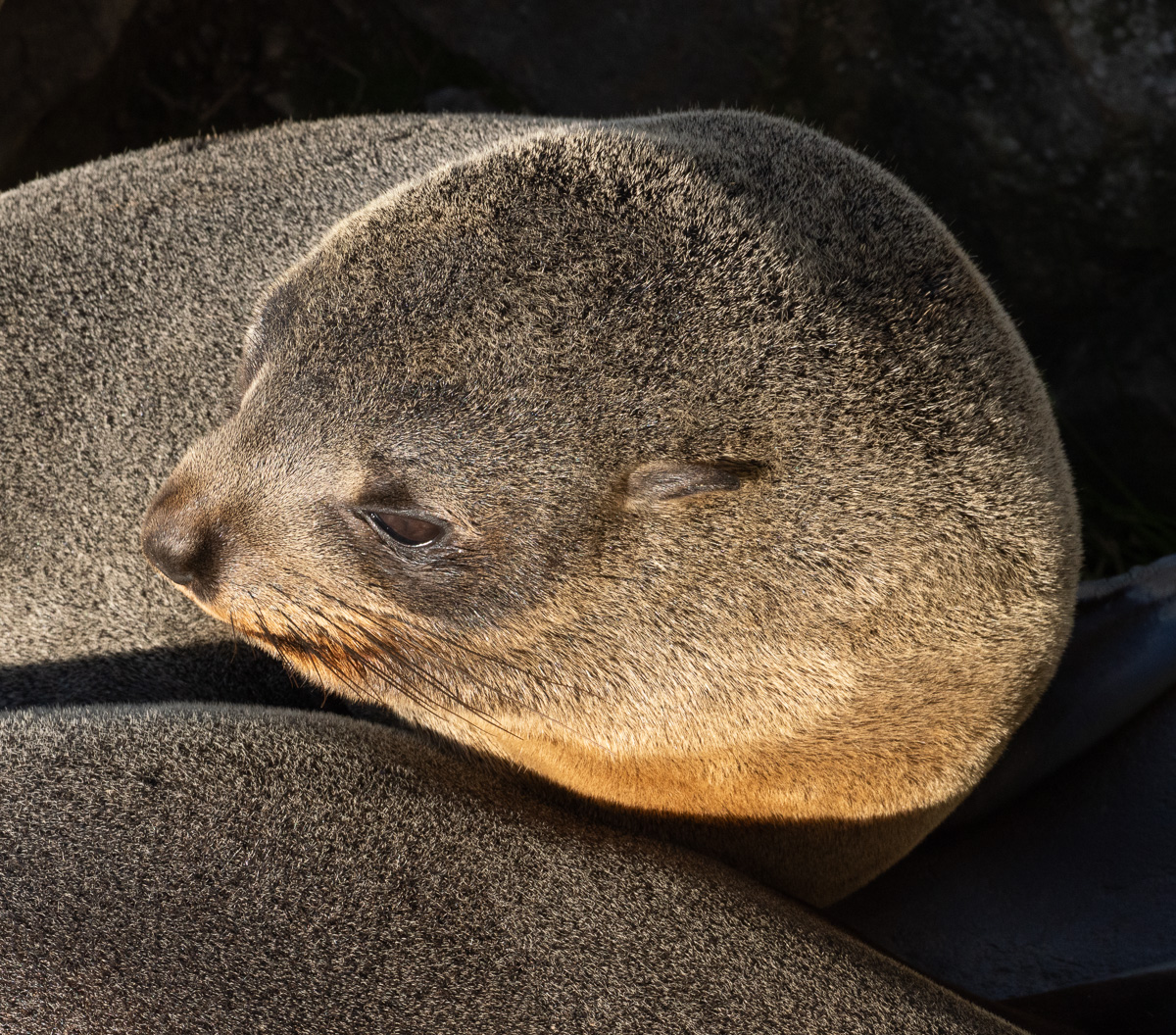


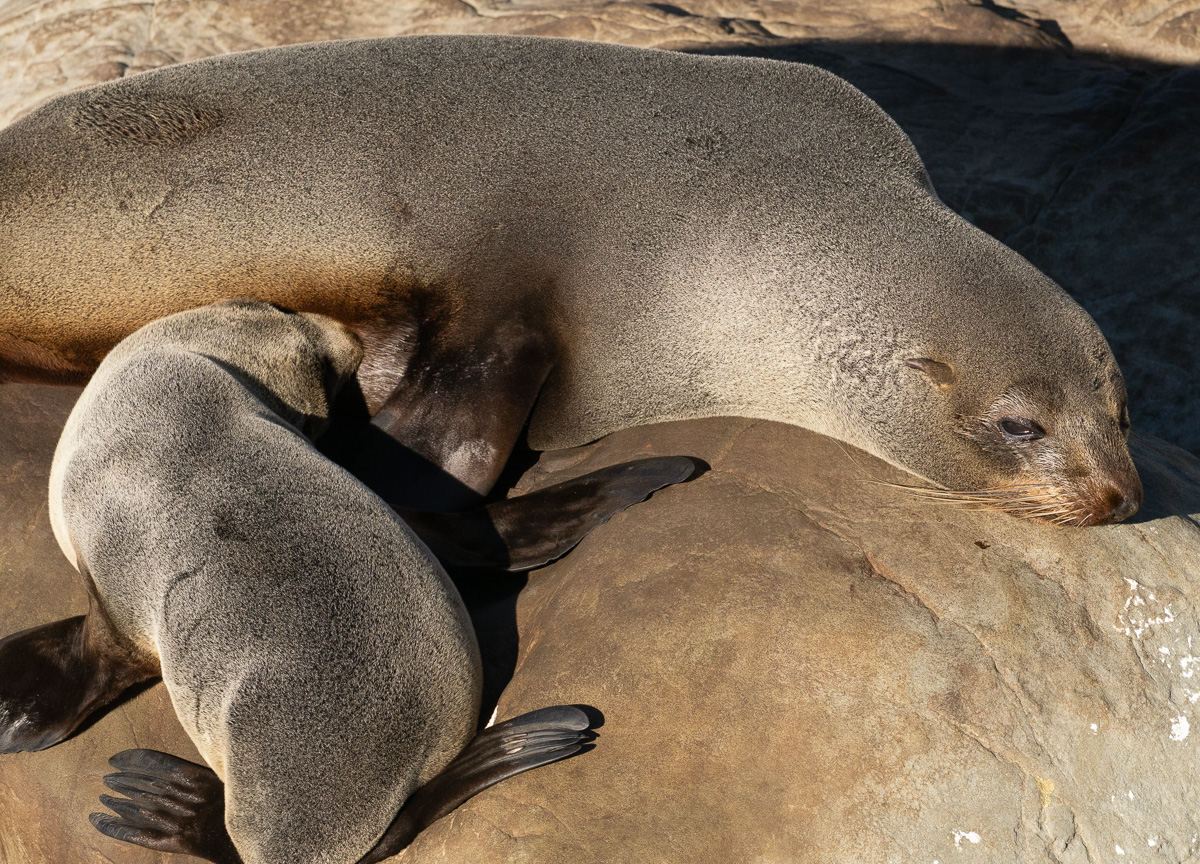

Lying on shore, seals look indolent. Reminiscent of lions that seem to spend more of their time lounging in the shade. However, seals spend lots of time actively swimming after food, especially when feeding pups, and earn their rest.




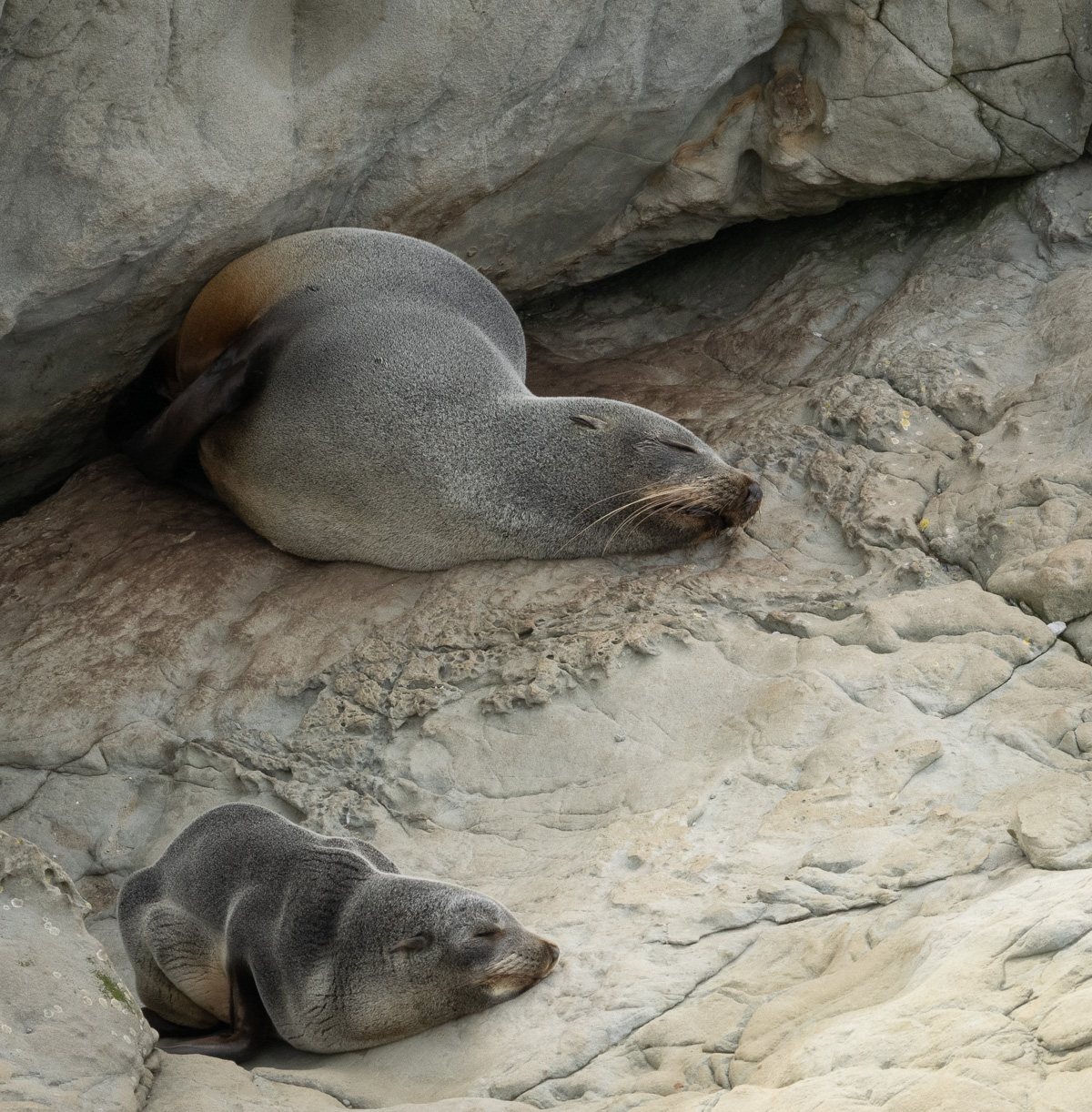
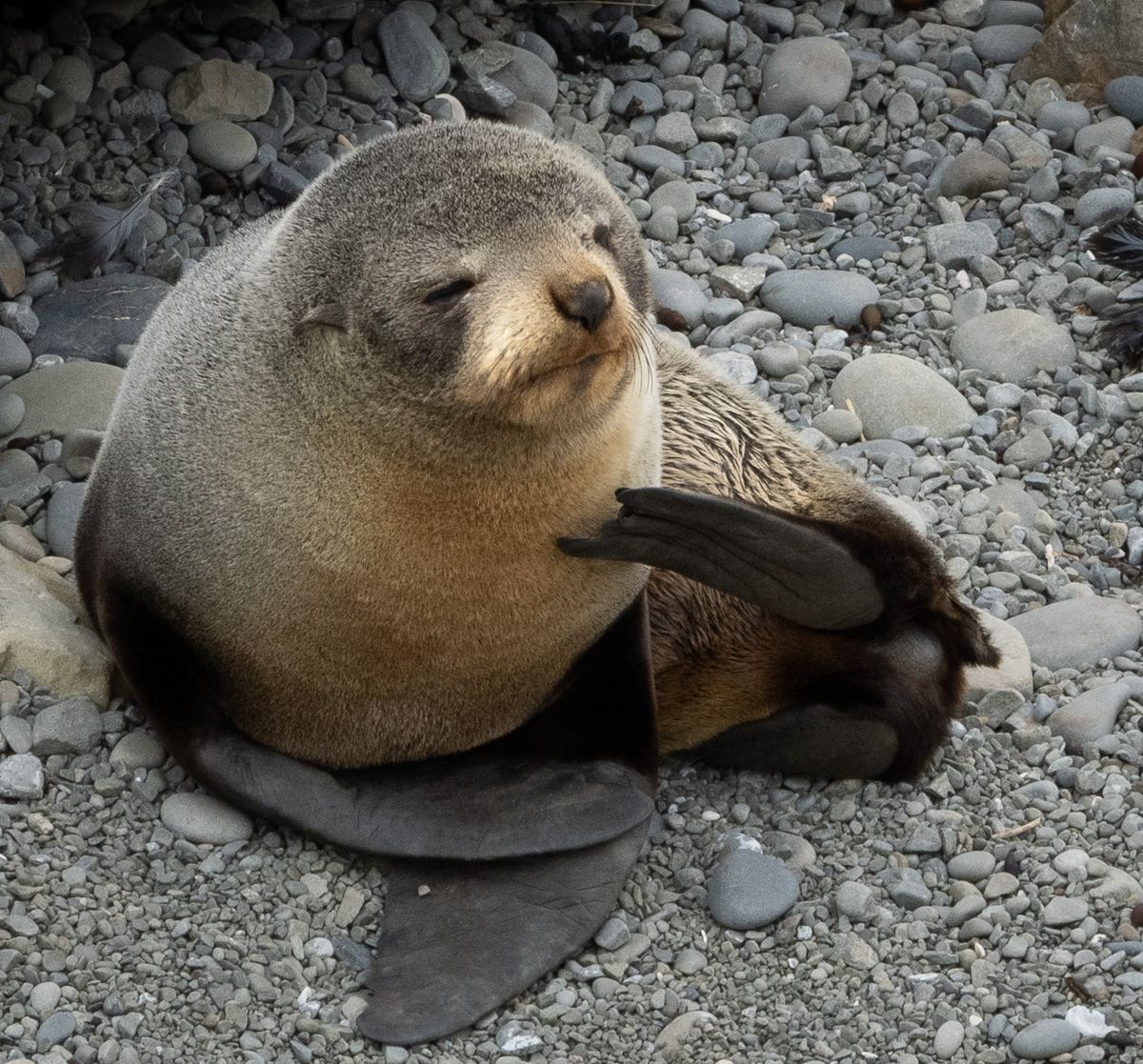
There are healthy populations of the New Zealand fur seal (Arctocephalus forsteri) all around the coast of the South Island, as well as a few that are establishing along North Island coasts. Seals have been steadily increasing in numbers since being fully protected in the 1950’s and as by-catch during fisheries operations has been reduced. The species is also found in Australia. Unlike leopard seals, which are found on sandy beaches, fur seals prefer rocky shores. Ohau Point on the Kaikoura Coast, is an excellent place to see them.

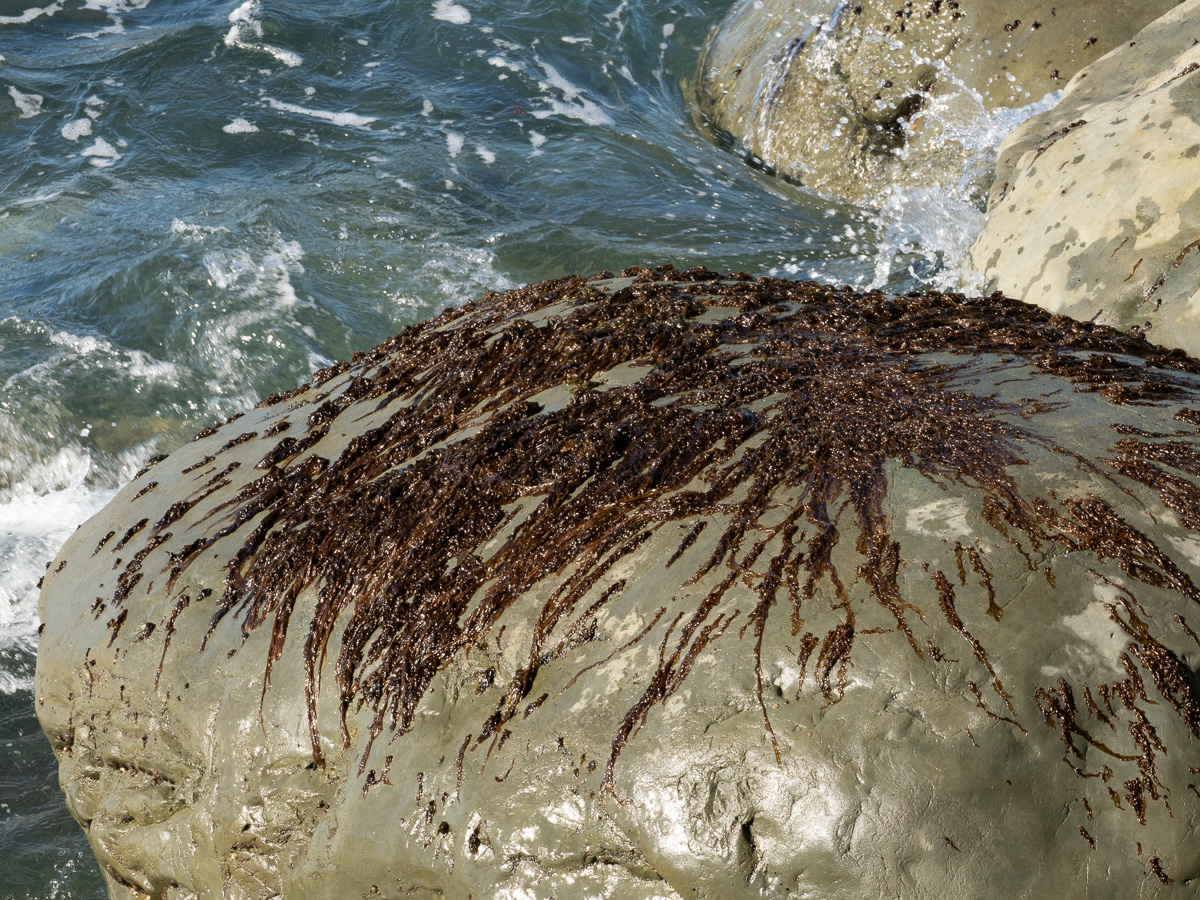
Rocky outcrops off Ohau Point

The native ice plant, Dysphyma australe, grows in rock crevices.

There is now an extensive lookout area with good parking that has been developed since the road was severely damaged during the 2016 Kaikoura earthquake. As almost the entire coastal section of the road had to be rebuilt, it was an opportunity to increase the quality of visitor experience along this wild coastline. All these images were made from points along the walkway.


Seals are still unpopular with some fishermen, and subject to occasional bouts of abuse. However, as city dwellers increasingly appreciate nature, seals are valued by many citizens, especially when wildlife comes to town. They often join forces to protect seals from dogs when they haul out on popular beaches. The Department of Conservation has provided signage that volunteers can put out to alert dog walkers of the presence of seals. Sorry, I didn’t think to take photos when I accompanied a friend to put signs around a seal on Sumner Beach, in Christchurch. If it happens again, I’ll try to rectify this! There are more seal images from Ohau Point to follow.


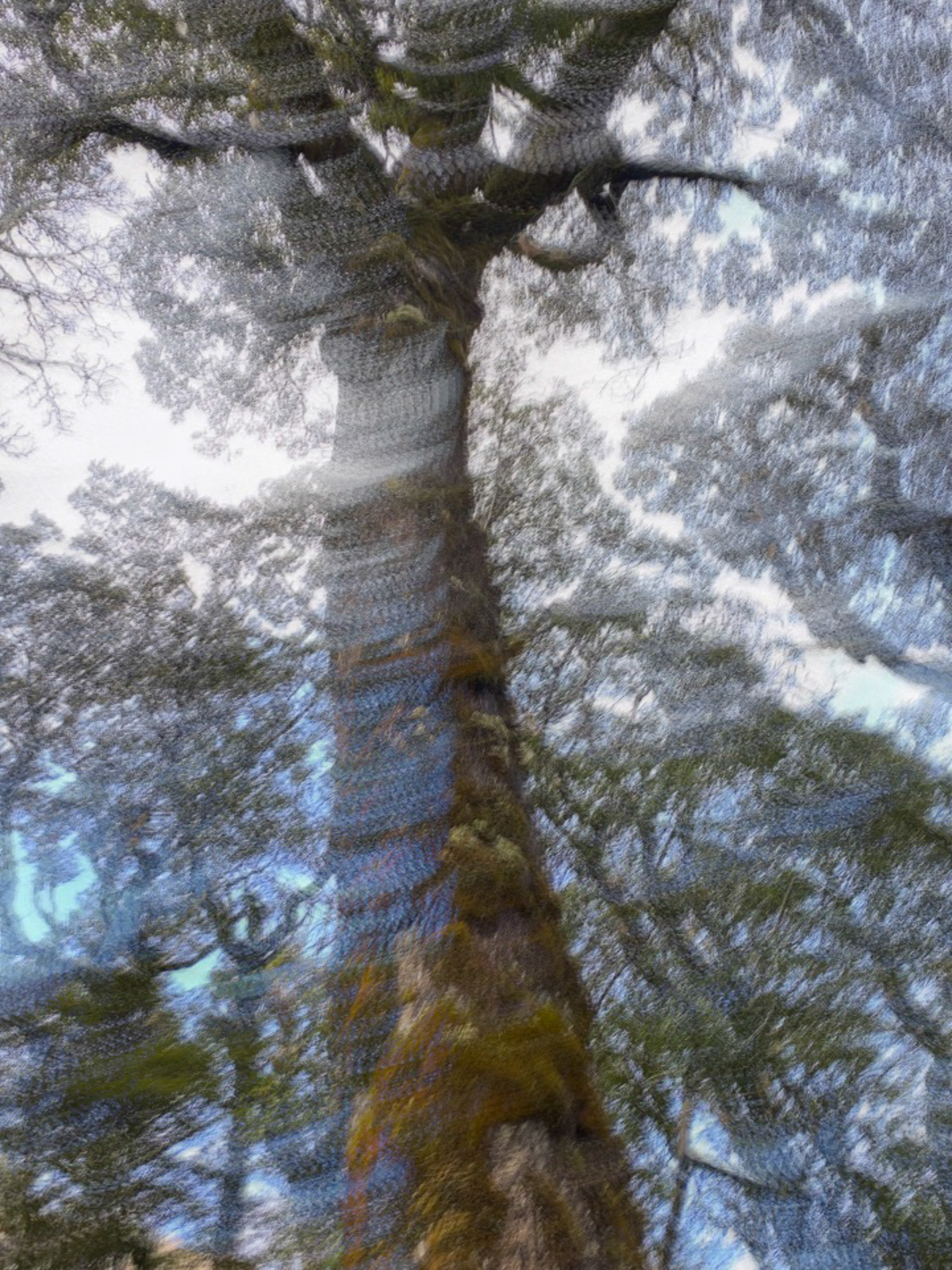
I love trees and have attributed personality to this specimen in beech forest at Arthur’s Pass National Park. Playing with iPhone apps that produce a variety of creative effects allows me to experiment with camera movement. Many of the results are unexpected, but with practise, sometimes I manage to create the effects that I’m after.
Snow Farm, Wanaka, New Zealand

While I was staying in Wanaka, I visited the Snow Farm to go for a walk. The ski field was closed because there was insufficient snow for skiing so we saw very few other people. Several groups had brought bicycles to cycle along the tracks, which were above the cloud layer shrouding the valleys below. I was surprised how much development there had been since my last visit, which admittedly was probably a couple of decades ago.Snow Farm is a centre for cross country skiing unlike the other ski areas in the area, and boasts stunning views of the Pisa Range. The ski field operates back country huts which are very popular, making it possible to do multi day hikes on skis.
Adjacent to the ski field is a vehicle testing area known as the Southern Hemisphere Proving Grounds. Here, winter testing facilities are provided for automotive companies from all over the world. These facilities are behind a big fence and the associated structures have grown substantially more than buildings on the ski field since my last visit. It appears to be a highly successful operation. However, snow and ice being in short supply, it is likely to be a few weeks before the facility is operating. Normally it is open from June to September each year.
I have just been over to the West Coast for a couple of weekend trips. It is appealing to those of us living in Christchurch to experience the contrast between the two coasts. While Canterbury is dry, the West Coast is usually very wet. The sea is calm on our side, with plenty of swimming beaches. On the Coast, it is rough, often a boiling cauldron that deters anyone from approaching, let alone entering the surf. Even under deceptively calm conditions there are strong undertows, swirling currents and rogue waves that have caught many unawares.
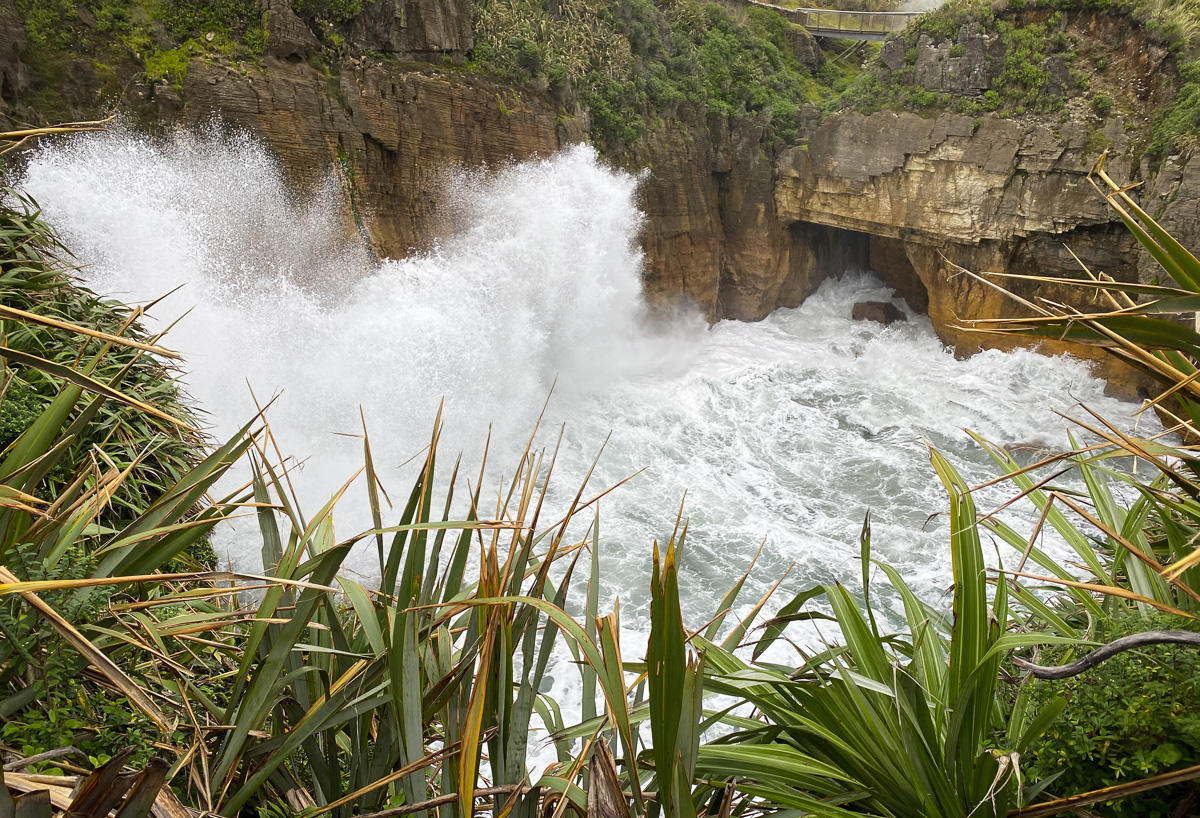
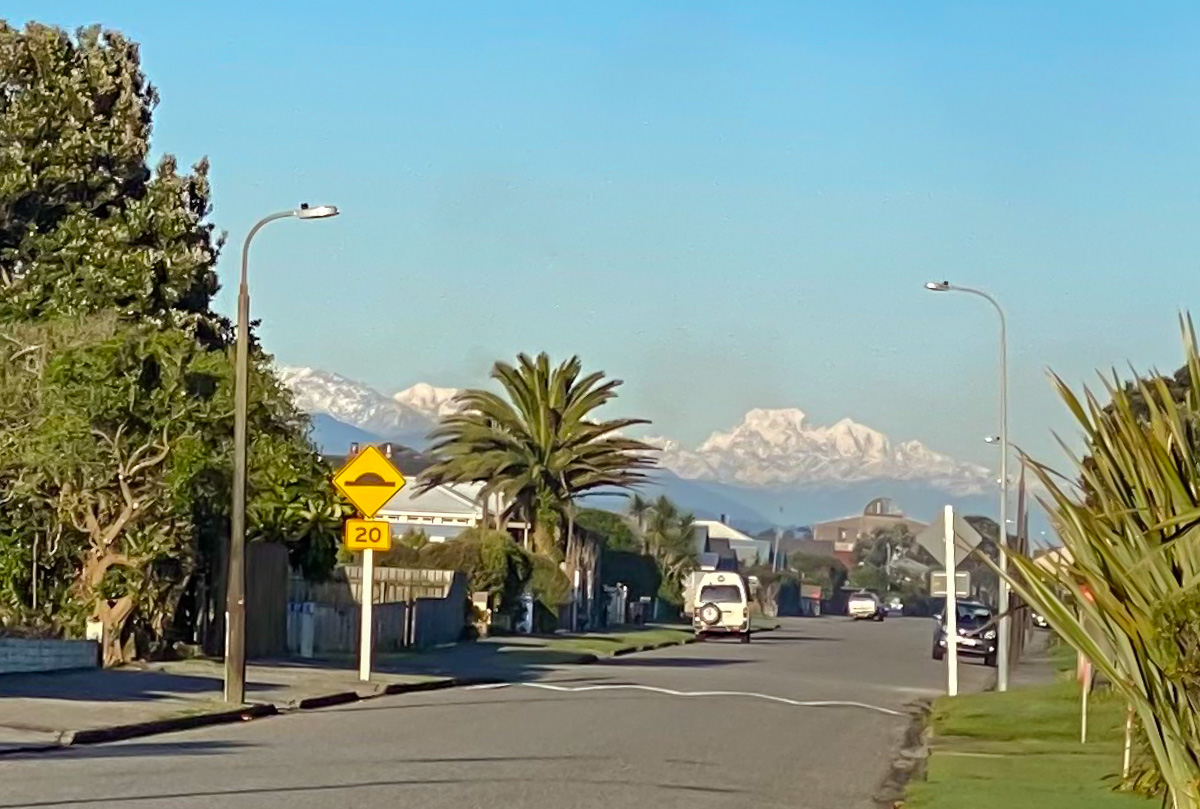
My two weekends were contrasting, too. Hokitika was so clear and sunny that New Zealand’s highest peaks, Mts Cook and Tasman, stood out from afar. The sky was overcast while were staying in Punakaiki, with the odd light shower of rain. It was pleasant enough to be outside photographing most of the time, though; nothing like the ferocious storm that battered the East Coast, wrecked bridges and roads, inundating farmland and urban areas alike while we were blissfully unaware of the devastation happening on the opposite coast. Christchurch generally receives 650 mm rain each year; this figure is 3000 mm on the West Coast. During the storm, touted as a one in a hundred year event, Christchurch received 150 mm in just 3 days, while in the hill country behind the city rainfall was more than 500 mm during the same period. The rain has now stopped, but rivers continue to run high and cleaning up and repair work has barely begun. I am still waiting to find out whether the roads will be open for my next trip out of town.
Recently a friend introduced me to a slow motion app for my phone, which I played while I was away, trying to discover what works and what doesn’t. This is still a work in progress, but here are two examples, the first from Hokitika, the second from Punakaiki.
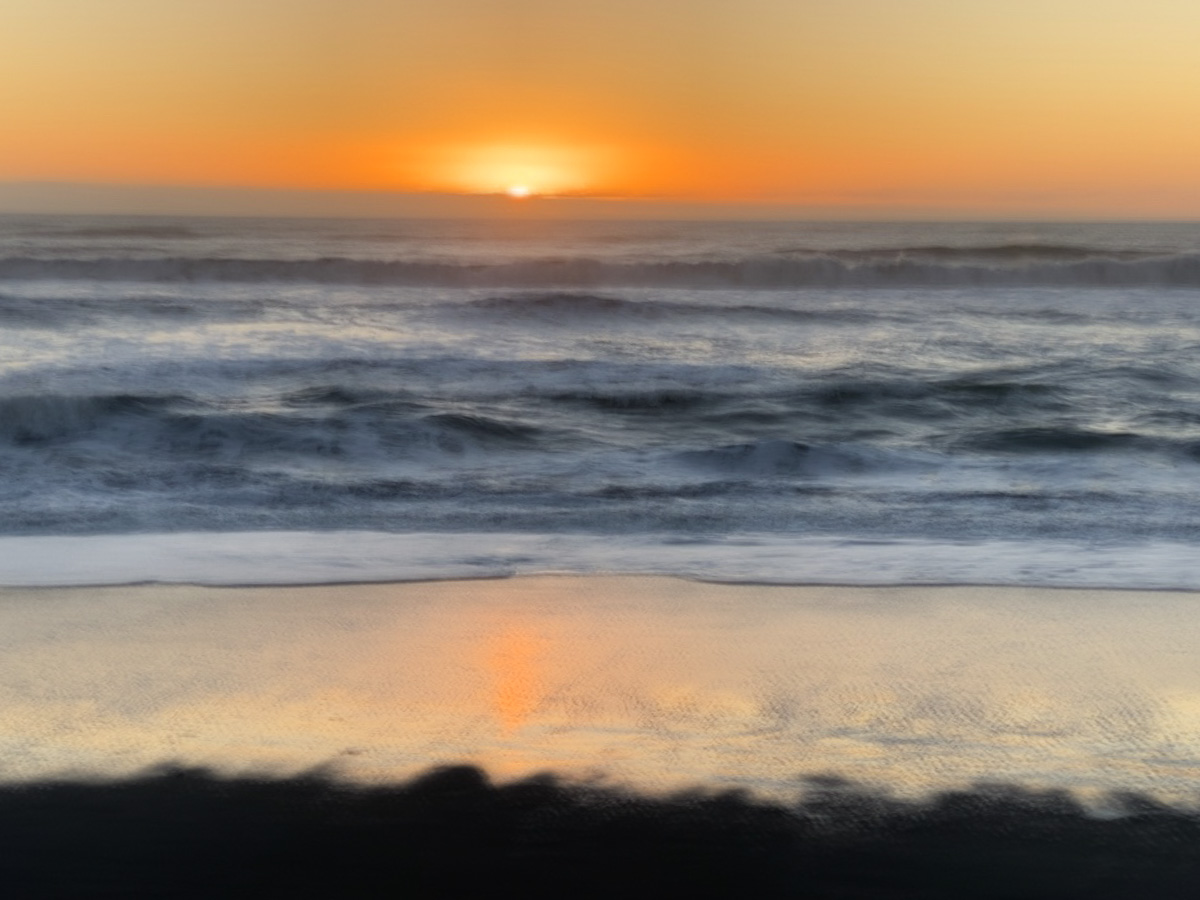

I have discovered that I like the effect of using infrared to photograph in cemeteries. Somehow, the technique seems to suit the mood of these places. This image is from Naseby.
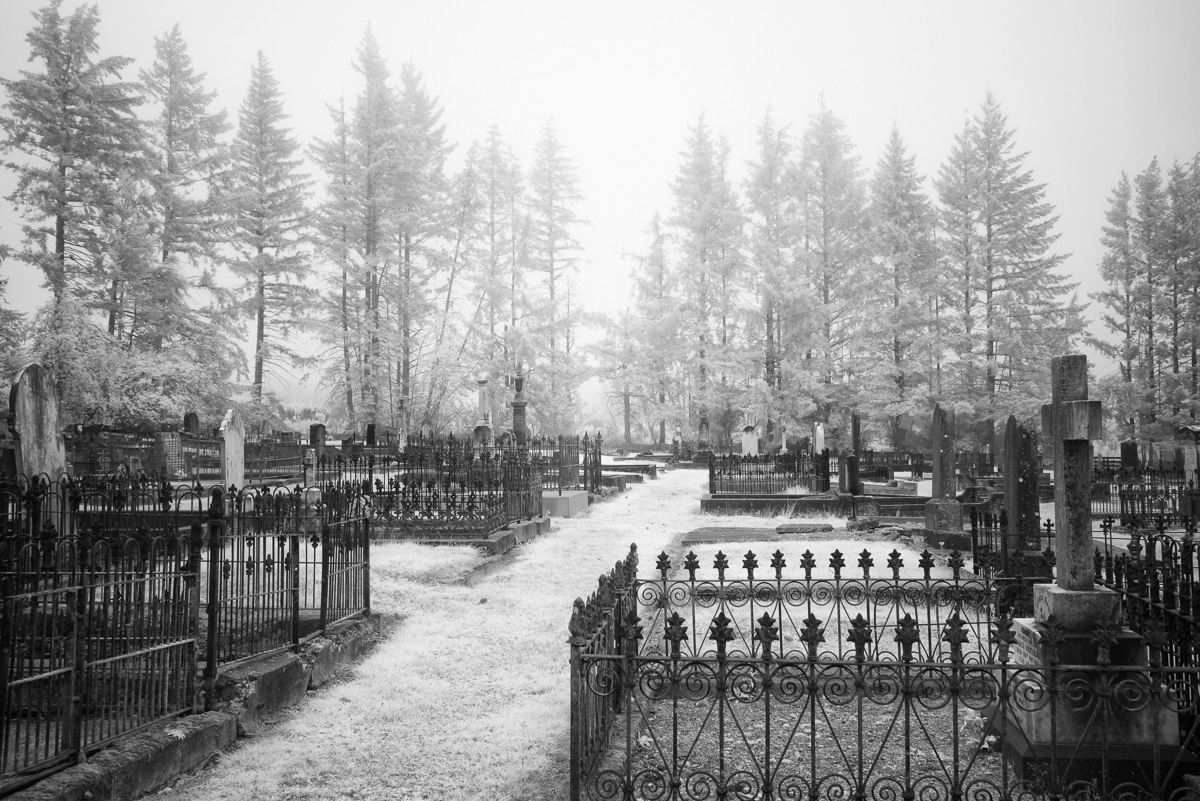
The light coloured path through the centre of the image seems an appropriate route to be taken by the resident ghosts. Misty conditions accentuated the ‘other worldly’ feel to this image. The trees are less substantial when their foliage is reproduced in lighter tones. Turning slightly to the left at the end of the path, the space between the trees indicates to me a route into the unknown.
Recently I have been using monochrome much more to interpret landscapes. Although colour is assumed to add life and vibrancy to an image, black and white is simpler and in some ways easier to work with. I think this preference for black and white was enhanced as I began to dabble in infrared photography. There needs to be adequate contrast for monochrome to be effective, but textures become more expressive. I use Nik Silver Efex Pro to transform my colour images. Dust spots are a scourge; they show up so much more in these images. I hope that I have removed them all here.

I made this image of Mt Cook, or Aoraki, (the highest point in New Zealand) during a clearing storm. The green foliage in the foreground was distracting in the colour image and the sky is more dramatic after the Nik transformation.
2021. From 2018 my life changed inexorably. Death, reality check, adjustment, Covid, travel restrictions, breast cancer, more reality check, more adjustment.
This blog has languished for years as I reinvented myself. A work-in-progress. Isn’t life always that anyway? Now I am keen to return. My early posts are still here as a benchmark. They are boring. Too long winded. An attempt at completeness, perfection; now my aim is more a commentary on my perceptions of life. Changing through time. More frequent posts. One photo at a time. I thought to change the title. Nature is still my primary interest so I left it the way it is. You won’t see too many humans here so the title mostly serves.

I made this image in the Christchurch Botanic Gardens when I was feeling hemmed in by too many people on a Sunday afternoon. Not the time of day I’d choose to go. I was there with a friend and my infrared-converted Nikon D750. Looking up at the sky for a means of escape, these two trees asked me to express their relationship. I called it Canopy Dance.

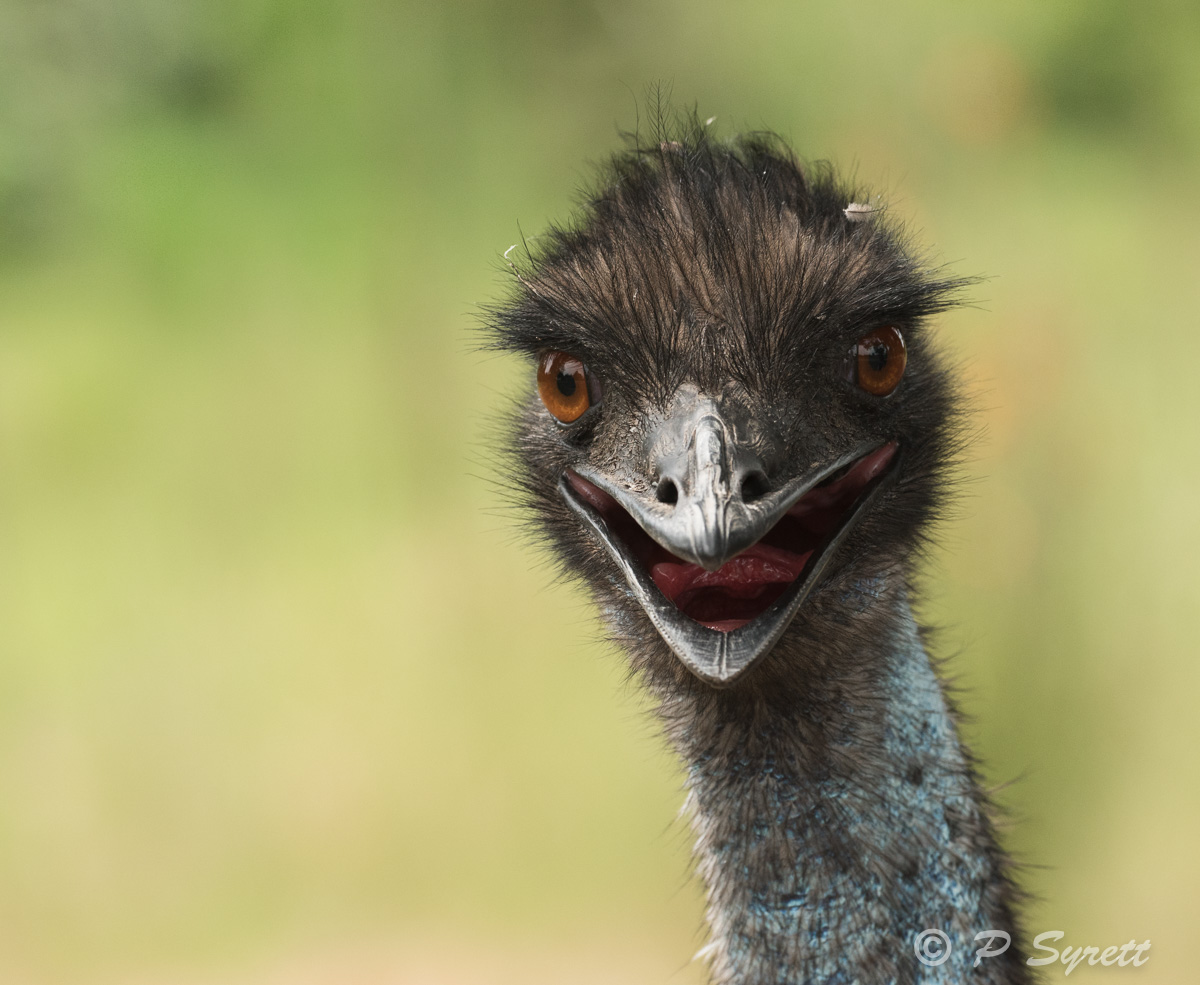
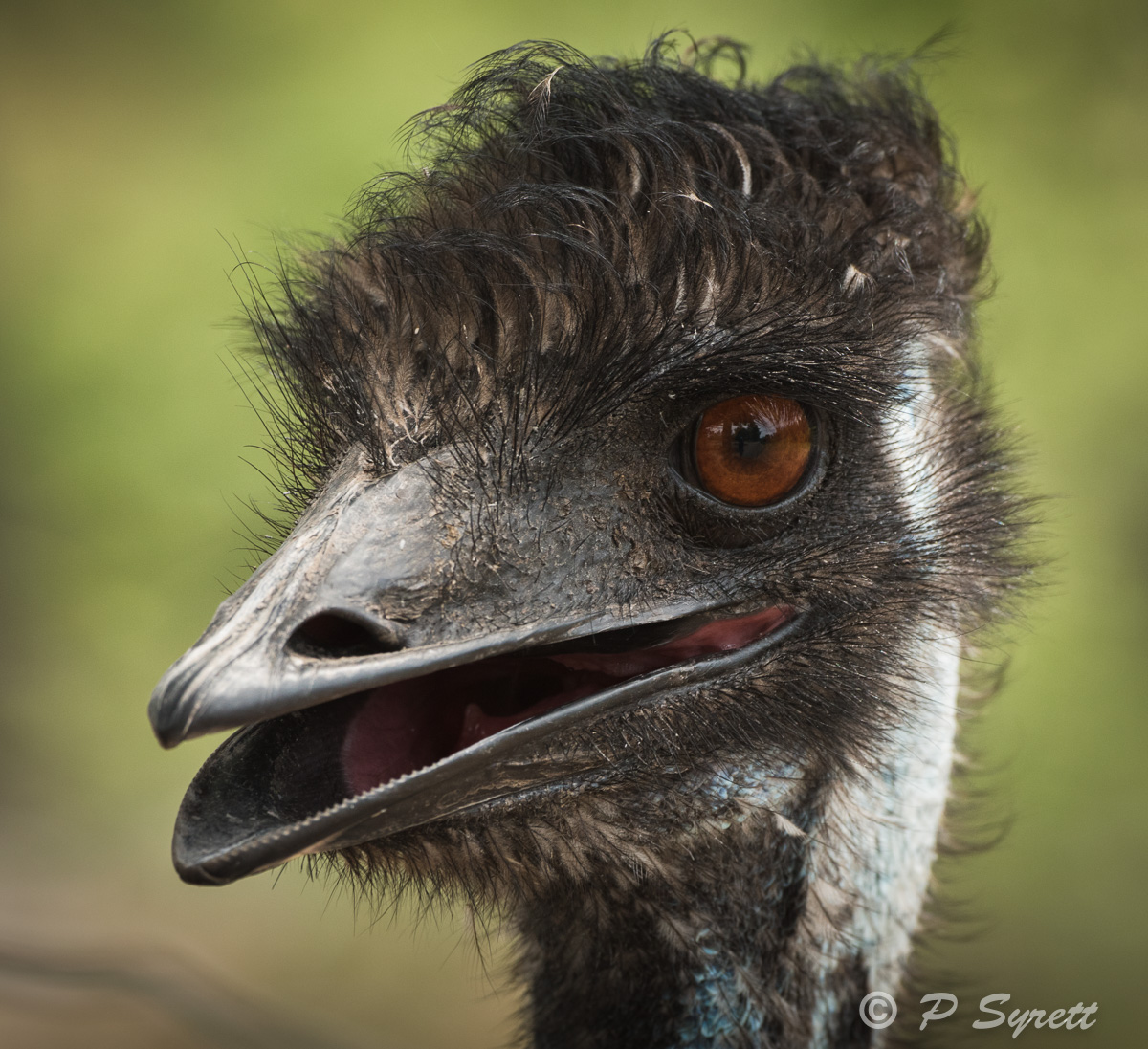
The emu (Dromaius novaehollandiae) is a large, flightless bird, in the ratite group, second in size only to the ostrich (found in Africa). Native to Australia, the emu’s closest relative is the much more rare, and colorful cassowary. New Zealand’s kiwi is another, slightly more distant, relative.

A few emus are farmed in New Zealand, but we also have an opportunity to see them in captivity at our local wildlife park. The ones that I have photographed are at Orana Park, in Christchurch. The emu is not endangered, so there is no rearing program for them here, nor are they likely to be the subject of a research project. They are kept at the park so that people can observe them behaving naturally in an outdoor, semi-wild environment.
The birds often pace up and down along the fence line emitting a booming sound. It is mostly the females that produce this noise, while males make a grunting sound. An inflatable throat pouch creates the booming, which if emitted at high intensity, may be heard up to 2 kilometres away.

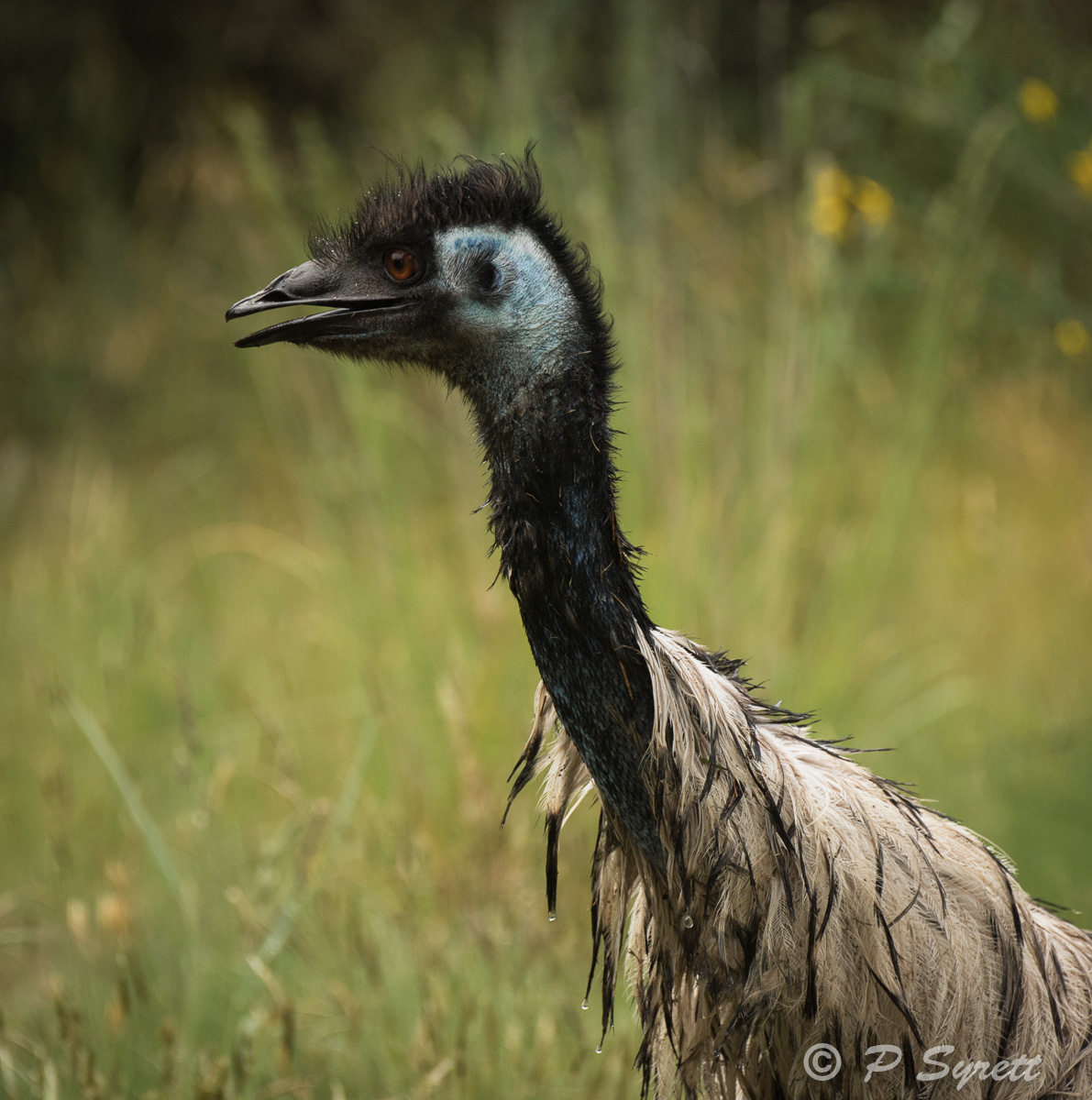
On hot days the staff turn on a hose to create a temporary pool in their enclosure, which the emus use for bathing. They sit in the pool, immersing their feathers, then stand up and shake off the water. Although they can’t fly, emus can run very fast. They have powerful beaks, so visitors need to be wary of getting too close to the wire. In the wild, they should not be approached, as powerful legs and feet can inflict a damaging kick.
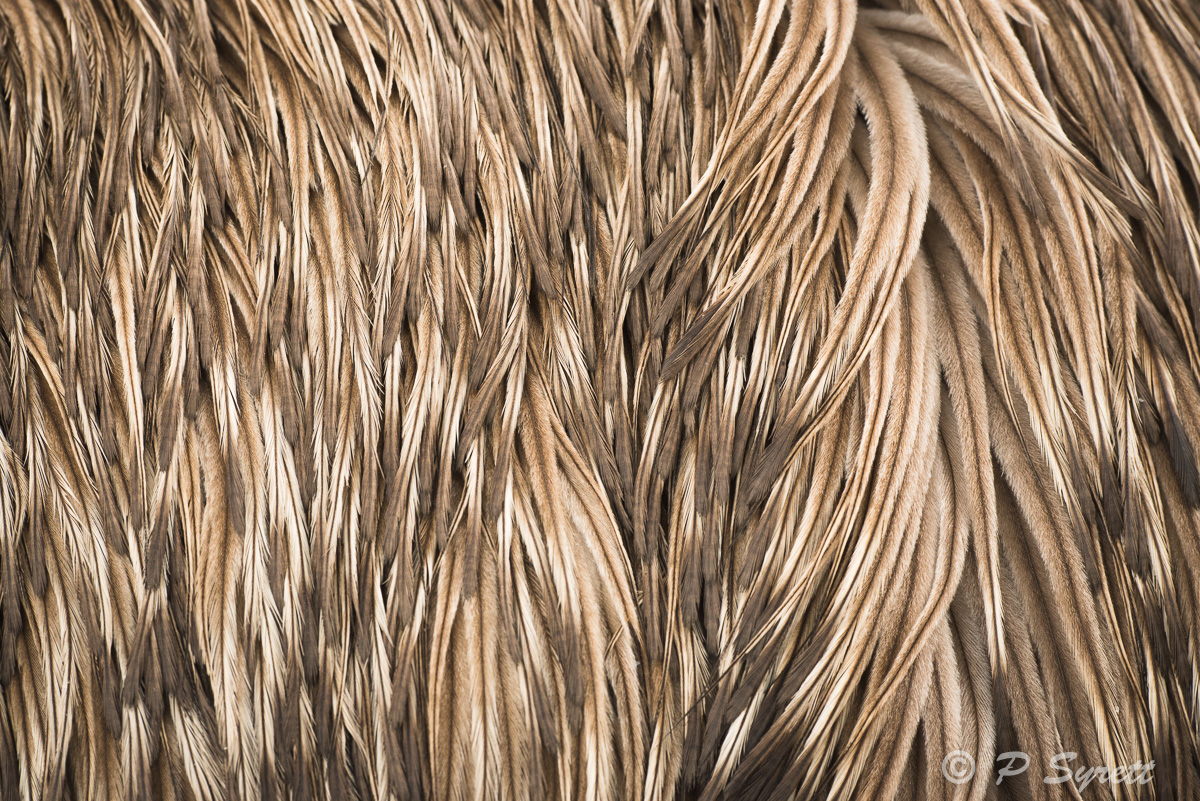
Emus’ soft feathers are very attractive, so it can be tempting to stroke them. However, this is probably not an impulse to give in to!
 polsnaturephotography